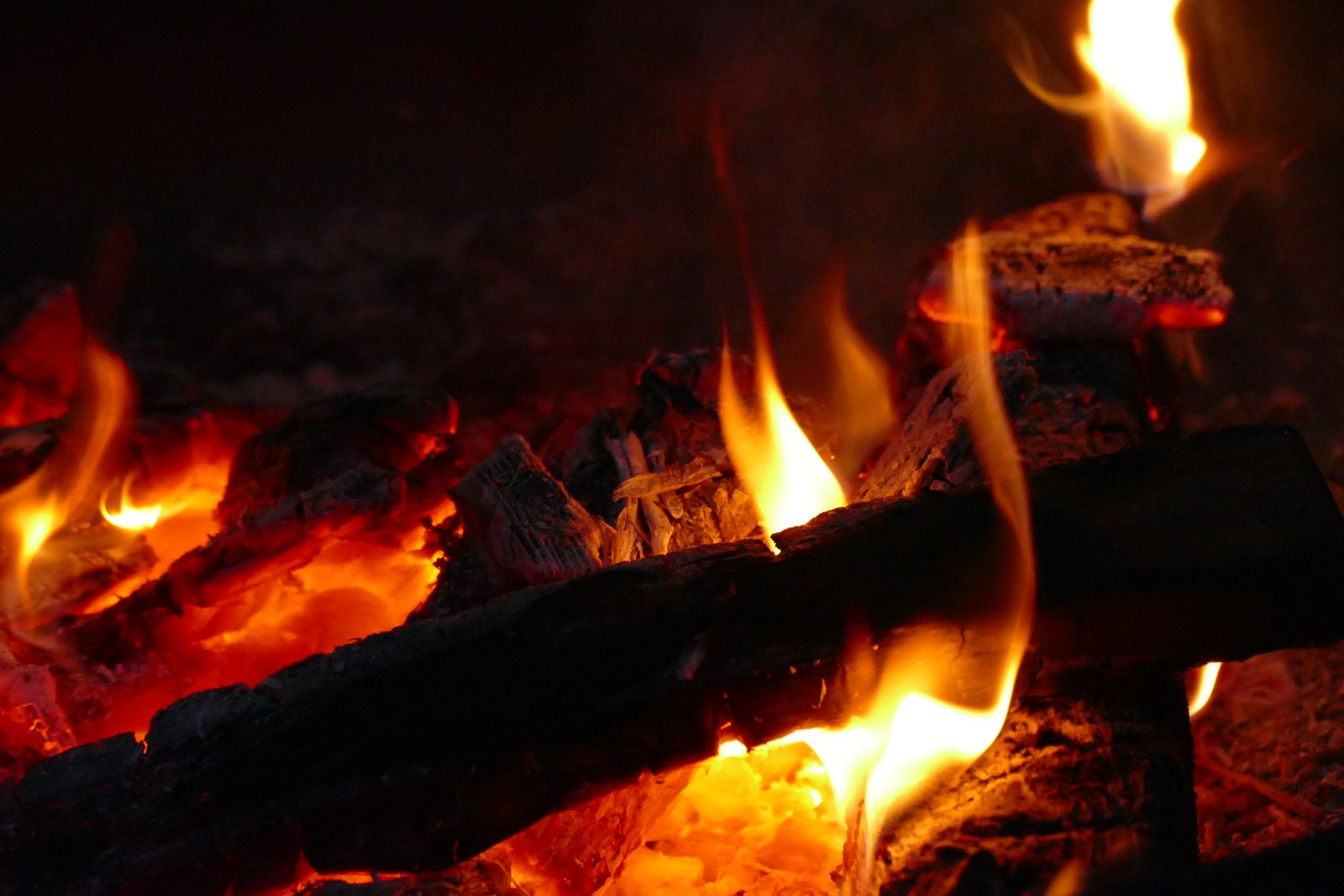
The scenario
It has rained all afternoon. The temperature is dropping, daylight is going, and the gear is damp. Every stick on the ground is dark with water, the leaf litter squelches underfoot, and a flame held to any of it produces nothing but steam and a curl of smoke. This is the moment most fires fail — not because fire is impossible in the wet, but because the person building it reaches for the wrong fuel and gives up at the wrong minute.
A fire in wet conditions is a problem of materials and method, not luck. The water is on the surface. Dry fuel exists within easy reach in almost any forested area, and a structure can be built that protects a young flame from the drizzle long enough to take hold. What changes in the rain is not the principle of fire but the margin for error — and the cure for a thin margin is preparation, far more of it than feels reasonable.
Rain attacks the fuel ladder at the bottom, where it matters most — and the cure for a thin margin is preparation, far more of it than feels reasonable.
The fuel ladder, and why rain breaks it
Every fire climbs a ladder of fuel sizes. A flame from a match or spark catches fine tinder, the tinder ignites pencil-thin kindling, the kindling builds enough heat to take thumb-thick sticks, and those finally carry wrist-thick fuel wood that gives lasting warmth. Smokey Bear describes the same progression: tinder of small twigs, dry leaves, grass, and needles; kindling of sticks smaller than an inch around; and larger logs on top of that.
Each rung depends on the heat of the one below it. Skip a size — touch a match straight to a thumb-thick stick — and the flame dies because there is not enough surface area to catch. Rain attacks the ladder at the bottom, where it matters most. Tinder and fine kindling have huge surface area relative to their mass, so they soak fast and refuse to light. The whole structure stands or falls on getting genuinely dry material in those first two rungs.
That is why the wet-weather rule is to over-collect at the small end. Gather two to three times the tinder and fine kindling that feels necessary. A dry-day fire can be sloppy and still catch; a wet-day fire that runs out of tinder at the critical moment simply goes out, and the second attempt starts colder and darker than the first.
Where dry wood hides when everything looks wet
The ground is the worst place to look. Fallen branches sit in their own puddle and wick moisture along their length. Standing dead wood is the first prize: dead branches still attached to a trunk, or a small standing dead tree, shed rain and dry in any breeze. The Forest Service and Smokey Bear both caution against cutting living or standing trees — the target is wood that is already dead and dry, not green or live material that will not burn anyway.
Look under the canopy of conifers, where dead lower branches stay sheltered and brittle. Snap a candidate; dry wood cracks sharply, while wet wood bends and folds quietly. The dead, twiggy growth low on a spruce or pine often stays dry through a long rain and makes excellent fine kindling.
When the surface of a larger piece is wet but the wood is sound, the dry fuel is inside. Splitting a forearm-thick piece down its length — driving a knife through it with a baton of another stick, the technique known as batoning — exposes a dry inner core even after days of rain. Resin-rich pine is the standout find: the orange, sticky heartwood called fatwood, found in old pine stumps and the knots of dead pines, is packed with flammable resin and lights from a spark even when the outside is wet. Strips of dry inner bark from dead birch, cedar, or juniper, teased into a loose fibrous bundle, are another reliable tinder.
Preparing tinder and feather sticks
Once dry wood is in hand, the work is processing it into ignitable forms before a single spark is struck. The order matters: build the whole supply first, sort it into piles by size, and only then start ignition. Fumbling for the next handful while a fragile flame burns down is how wet fires die.
The most useful single skill here is the feather stick. Take a dry, split piece of kindling and shave long, thin curls down its length without slicing them off, so the stick ends in a fan of attached shavings. Those thin curls have the surface area of tinder while staying anchored to solid wood, which means they catch from a spark and then carry flame straight into the stick. Several feather sticks built into the base of a fire can substitute for natural tinder entirely when no dry leaves or grass can be found.
Scrape a fistful of fine fuzz from inner bark, fatwood, or feather-stick shavings as the true tinder — material no thicker than pencil lead. Behind it, ready a generous pile of pencil-thin to pencil-thick kindling, then thumb-thick sticks, then the wrist-thick fuel. Prepare far more at every stage than seems needed. In the wet, the early fuel burns fast and dirty as it drives off moisture, and a thin supply stalls before real heat arrives.
A fire is not out because it has stopped flaming. It is out when it is cold to the touch, every time, without exception.
A dry platform and a structure that sheds water
A fire built directly on wet ground loses heat to the soil and draws moisture up into the fuel. Lay a platform first: a raft of wrist-thick dead branches, a slab of dry bark, or a flat dry stone, set down to lift the tinder off the cold, wet earth. This single step keeps the base of the fire dry and reflects heat back up into the young flames.
The structure on top should both feed air to the flame and shield it from falling rain. A lean-to leans kindling against a thicker stick driven into the platform, creating a sheltered pocket beneath where tinder sits protected from drizzle — Smokey Bear lists the lean-to among its recommended builds. A teepee of kindling stood tent-style over the tinder draws air upward and concentrates heat at the center. A log cabin stacks kindling in right-angled layers around the tinder, which Smokey Bear notes makes a longer-lasting fire and gives a stable frame to add fuel to. The National Park Service advises a cross-hatch pattern with the larger wood to keep airflow moving through the stack.
An alternative worth knowing in steady rain is the top-down, or upside-down, fire: the largest wrist-thick fuel goes on the bottom, then thumb-thick, then kindling, with the tinder and feather sticks on top. Lit from above, it burns downward and the lower layers dry in the rising heat before the flame reaches them — a structure that effectively pre-dries its own fuel.
Ignition, airflow, and patience
Two ignition sources earn their place in the wet. A ferrocerium rod throws sparks at roughly three thousand degrees Fahrenheit and works soaked, since the rod itself does not need to be dry — it is scraped to shed hot metal sparks directly into prepared tinder. Matches and a lighter are faster but vulnerable: a butane lighter struggles in the cold and a paper match dies in the wind, so they should be carried dry in a sealed bag alongside the rod as a backup, not the only plan. A dedicated tinder or accelerant carried from home — cotton pads worked with petroleum jelly, commercial fire cubes, or a stub of fatwood — removes the hardest variable from the whole exercise.
Smokey Bear and the National Park Service are firm on what not to use: never pour gasoline or volatile flammable liquids on a fire. The Park Service permits only lighter fluid as an accelerant and warns that other fuels are dangerous. The honest answer in the wet is that the fire is won at the materials stage, not the chemistry stage.
Once tinder catches, the temptation is to pile on wood and smother the new flame. Do the opposite: add the smallest kindling one piece at a time, give the fire air, and blow low and steady at the base of the coals to drive oxygen in — Smokey Bear's instruction to blow lightly at the base holds in any weather. A wet fire smokes and sputters as it boils water out of the early fuel; that stage is normal and demands patience, not more wood. Only when the kindling is burning with real conviction should thumb-thick and then wrist-thick fuel go on. From a cold, soaked start, expect this to take fifteen to thirty minutes of steady, unhurried work.
Restrictions, and putting it dead out
Before any fire is built, confirm it is allowed. The National Park Service stresses that every park sets its own rules on where and when fires are permitted, and that dry, windy weather often means campfires are banned outright — a single phone call or posted notice settles it. Use only locally sourced wood, the Park Service adds, to avoid moving pests into new ground.
When the fire is done, the standard agency method is to drown, stir, and feel cold before leaving. Smokey Bear's sequence is exact: pour lots of water on the fire until the hissing sound stops, stir the water into the embers, dirt, and sand with a shovel, keep adding water and dirt until all material is cool, then hover the back of a hand over the ashes to confirm there is no remaining heat. The Park Service warns that whitish or gray coals can hold heat for hours, so douse thoroughly and, if only dirt is available, spread the coals and stir dirt through them until they are completely out.
A fire is not out because it has stopped flaming. It is out when it is cold to the touch, every time, without exception.