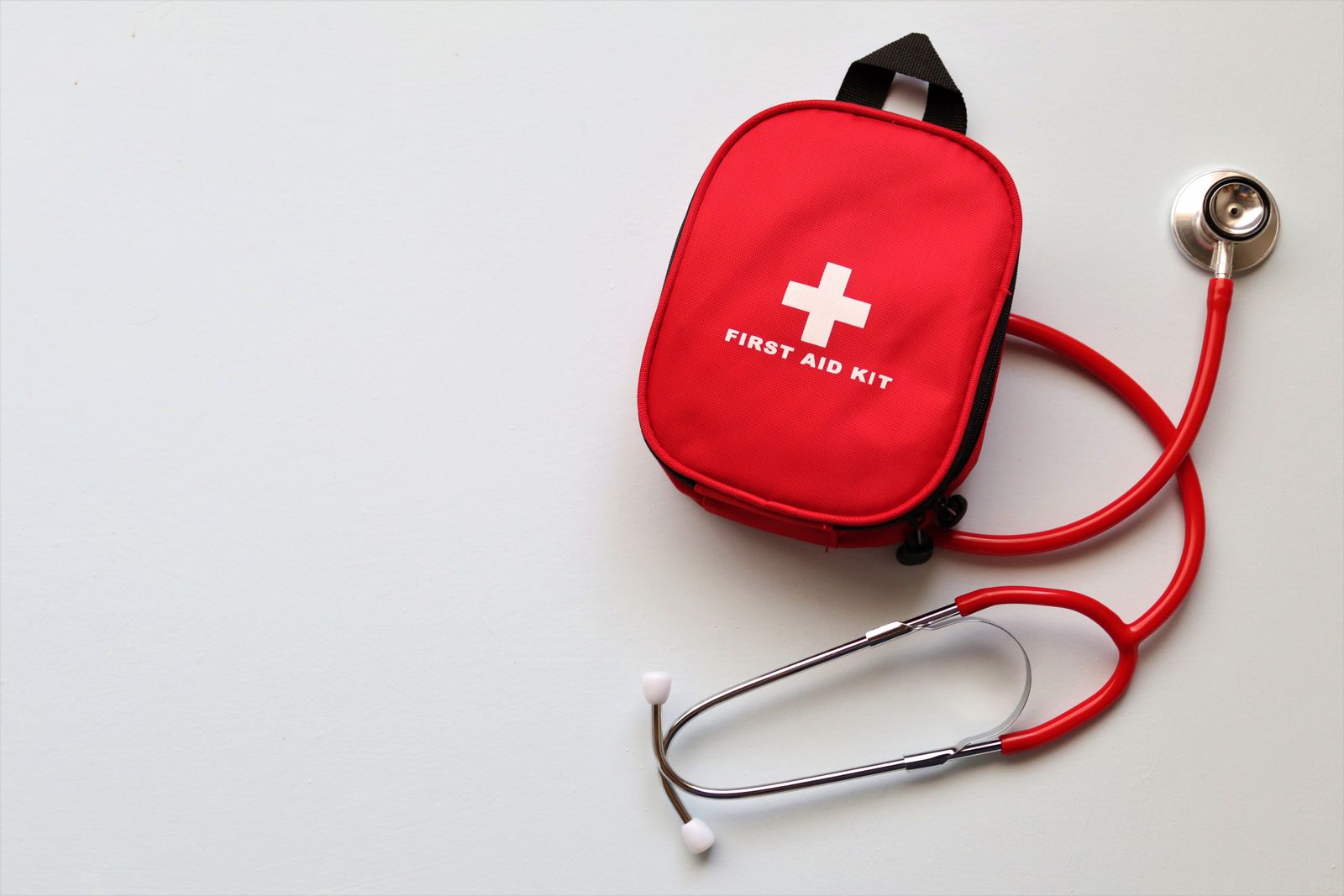
The first ninety seconds
A man at the next table stands up, grabs his throat, and can't speak. Or a coworker drops to the floor mid-sentence and stops moving. Or someone slices an artery on a table saw and the floor goes red faster than seems possible. In each case the people nearby decide the outcome long before an ambulance arrives. Emergency response time in much of the country runs seven to fourteen minutes. Brain cells start dying after four minutes without oxygen.
The good news is that the skills that matter most in those minutes are simple, physical, and learnable. None require a medical degree. All of them start with the same instruction: call 911, or have someone specific call while you act. The six skills below cover the situations most likely to kill a healthy adult before help arrives.
This is researched general information, not medical advice and not a substitute for certified training. Reading about compressions is not the same as doing them under an instructor's eye. Treat this as a map, then go take a class.
Brain cells start dying after four minutes without oxygen, and ambulances rarely arrive that fast.
1. Hands-Only CPR
Sudden cardiac arrest kills when the heart stops pumping blood. Chest compressions take over that job manually, keeping oxygenated blood moving to the brain until a defibrillator or paramedics arrive. The American Heart Association promotes Hands-Only CPR for untrained or out-of-practice bystanders precisely because it strips the task down to two steps: call 911, then push hard and fast in the center of the chest.
Place the heel of one hand on the center of the chest, on the lower half of the breastbone, and stack the other hand on top. Lock the elbows and use body weight, not arms. The AHA standard is 100 to 120 compressions per minute, pressing about two inches deep on an adult, and letting the chest fully recoil between each push. The beat of the Bee Gees' 'Stayin' Alive' lands almost exactly in that rate range, which is why instructors keep using it.
Do not stop to check for a pulse and do not be afraid of pushing too softly. Most bystander CPR fails because compressions are too shallow and too slow, not too hard. If an automated external defibrillator (AED) is available, turn it on and follow its spoken instructions; it will not shock a heart that does not need it.
2. Stop the Bleed
Uncontrolled bleeding is the leading cause of preventable death after injury, which is the entire premise of the Stop the Bleed campaign run by the American College of Surgeons. A person can bleed to death from a major limb wound in minutes, far faster than any ambulance can reach them, so control has to happen on the spot.
Start with hard, direct pressure: press both hands directly on the wound with as much force as possible, using a clean cloth or gauze if available, and do not let up. If a deep wound on a limb or junction keeps bleeding through, pack it: stuff gauze or clean cloth firmly into the wound cavity, pressing toward the source of bleeding, then maintain pressure on top. Wound packing is uncomfortable to do and to receive, and it works.
For a life-threatening bleed on an arm or leg that pressure cannot stop, use a tourniquet. Place it 'high and tight,' two to three inches above the wound and never directly on a joint, then twist the windlass until the bleeding stops. A correctly applied tourniquet hurts; that pain is expected, not a sign to loosen it. Note the time it went on, and never remove it yourself once placed.
3. The Heimlich for a choking adult
A choking person who can still cough forcefully or speak should be left to clear it themselves; coughing is the most effective force available. The emergency is the person who cannot cough, cannot speak, and may be clutching their throat, the universal sign of choking. According to the American Red Cross, a conscious choking adult needs back blows and abdominal thrusts, alternating between them.
Stand behind the person, lean them slightly forward, and deliver five firm back blows between the shoulder blades with the heel of the hand. If that fails, give five abdominal thrusts: wrap both arms around the waist, make a fist just above the navel, grasp it with the other hand, and pull sharply inward and upward. Alternate five back blows and five thrusts until the object comes out or the person becomes unresponsive.
If the person goes unconscious, lower them to the floor, call 911 if it has not happened yet, and begin CPR; chest compressions can themselves dislodge an obstruction. For a pregnant or large person, give chest thrusts instead of abdominal thrusts, positioning the fist on the center of the breastbone.
A correctly applied tourniquet hurts; that pain is expected, not a signal to loosen it.
4. The recovery position
An unconscious person who is breathing normally faces a quiet danger: lying flat on the back, the tongue or vomit can block the airway. The recovery position, taught in American Red Cross first aid courses, rolls the person onto their side so the airway stays open and fluids drain out of the mouth instead of into the lungs.
Kneel beside the person. Place the near arm out at a right angle, bring the far arm across the chest with the back of the hand against the cheek, then bend the far knee up and use it as a lever to roll the body toward you onto its side. Tilt the head back slightly to keep the airway open and make sure the mouth points downward.
Use this only for someone who is unconscious but clearly breathing on their own. If the person is not breathing or only gasping, skip the recovery position and start Hands-Only CPR instead. Once they are on their side, keep watching the breathing until help arrives, because it can stop.
5. Spotting stroke and heart attack
Some emergencies are not about what you do with your hands but how fast you recognize them and call 911. Stroke and heart attack both reward speed, because the treatments that save brain and heart tissue work in a narrow time window. The faster the call, the more is saved.
For stroke, use FAST. F is Face: ask the person to smile and watch for one side drooping. A is Arms: ask them to raise both arms and watch for one drifting down. S is Speech: listen for slurred or strange words. T is Time: if any of these appear, call 911 immediately and note when symptoms started, because that timestamp drives treatment decisions.
Heart attack signs are often less dramatic than the movies suggest. Watch for chest pressure or discomfort, pain spreading to an arm, jaw, neck, or back, shortness of breath, cold sweat, nausea, or lightheadedness. Symptoms can be subtler in women. Do not wait to be sure and do not drive the person yourself; call 911, and unless allergic, an aspirin chewed while waiting can help.
6. Treating for shock
Shock is the body's circulation failing to deliver enough blood and oxygen to vital organs, and it can follow major bleeding, serious injury, severe allergic reaction, or a cardiac event. Left untreated it is deadly on its own, even after the original injury is handled. The signs include pale, cool, clammy skin, rapid shallow breathing, a weak fast pulse, confusion, weakness, and thirst.
Once 911 is called and any obvious bleeding is controlled, have the person lie down. If there is no head, neck, back, or leg injury that makes it unsafe, raising the legs about a foot can help blood return to the core. Keep them warm with a coat or blanket, because shock drops body temperature, and loosen tight clothing.
Do not give food or water even if they ask, since they may need surgery, and reassure them while you wait. Keep monitoring breathing and responsiveness; a person in shock can deteriorate quickly and may need CPR before the ambulance arrives.
Reading is not training
Every skill here improves dramatically with an afternoon of hands-on practice. The American Heart Association and the American Red Cross both run in-person and blended classes where you push on a manikin, feel the depth and rhythm of real compressions, and fumble the recovery-position roll until it becomes automatic. Stop the Bleed courses let you pack a simulated wound and crank a real tourniquet, so your hands already know the motion under stress.
Muscle memory is the entire point. In a real emergency, adrenaline narrows thinking, and people fall back on what their hands have rehearsed. Take a certified course, refresh it every couple of years, and keep a basic first aid kit and a tourniquet where you can reach them. The skill you practiced once may be the only thing standing between someone and a preventable death.