The Clear Stream Lie
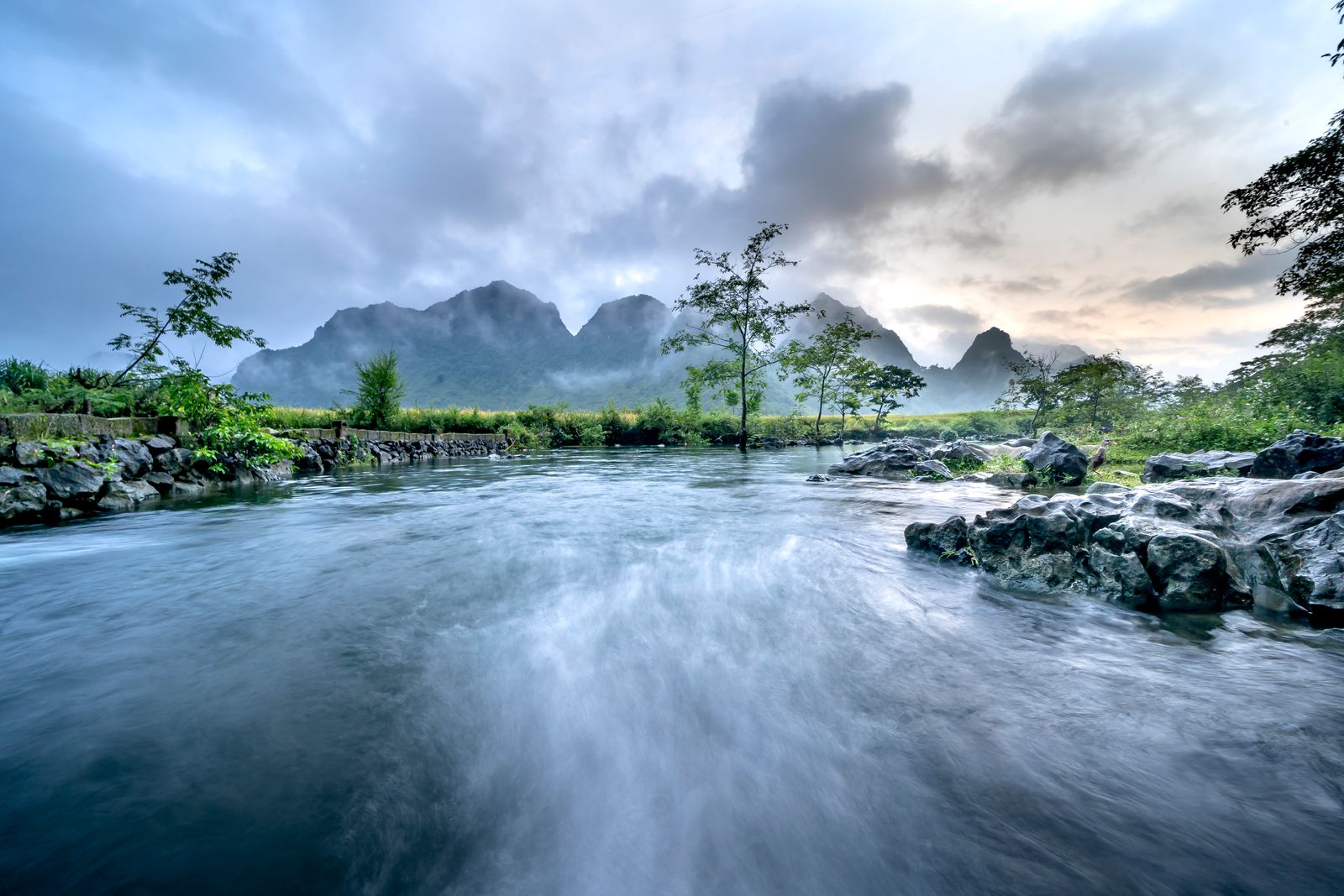
A creek runs off a snowfield at 9,000 feet, cold and clear enough to read a coin on the bottom. It looks like the safest water for miles. It is not necessarily safe at all. Clarity measures suspended sediment, not microorganisms, and the organisms that cause the most backcountry illness are invisible at any magnification a hiker carries.
Upstream of that coin there may be a marmot colony, a pack-string crossing, or a hunter's gut pile. Giardia and Cryptosporidium are shed in animal and human feces and survive for weeks in cold water. Cold, clear, and moving are aesthetic qualities. They are not disinfection.
Clarity measures suspended sediment, not microorganisms. Cold, clear, and moving are aesthetic qualities, not disinfection.
Three Threats, Not One
Waterborne pathogens fall into three classes, and the practical problem is that they do not respond to the same treatment. Protozoa are the largest: Giardia and Cryptosporidium are cyst- and oocyst-forming parasites that cause prolonged diarrheal illness. They are big enough to filter out, but Cryptosporidium oocysts have a tough shell that resists chemical disinfectants.
Bacteria are the middle tier by size: E. coli, Salmonella, and the organisms behind cholera, dysentery, and typhoid. The World Health Organization attributes roughly 505,000 diarrheal deaths a year to microbiologically contaminated drinking water, and identifies fecal contamination as the single greatest risk to water safety. Bacteria are vulnerable to heat, to chemical disinfectants, and to fine filters.
Viruses are the smallest and the reason no filter is a complete answer. Norovirus, hepatitis A, and poliovirus measure tens of nanometers across. They pass straight through the pores of a typical backpacking filter, but they are readily killed by heat and by chemical disinfectants. Each method covers part of the field; the skill is knowing which part.
Boiling: The Only Method That Kills Everything
Heat is the most reliable disinfectant a person can apply in the field because it does not depend on pore size, water chemistry, or clarity. The CDC and EPA both direct users to bring water to a rolling boil for one minute. At elevation, water boils at a lower temperature, so the contact time goes up: above about 6,500 feet (2,000 meters) per the CDC, three minutes. The EPA states the same in feet of altitude, citing above 5,000 feet.
A genuine rolling boil destroys protozoa, bacteria, and viruses alike. The threat classes that defeat every other single method are all neutralized by heat, which is why boiling sits at the top of the ranking on effectiveness.
The cost is fuel and time. Boiling a day's water for a group burns gas a backpacker may not be carrying, and it leaves water hot and flat. It does nothing about cloudy water either; sediment and chemical contaminants survive the pot. Boiling wins on microbial certainty and loses on logistics, which is why it is usually the backup rather than the everyday routine.
The filter takes the Cryptosporidium out physically; the chemical handles the viruses the filter let through.
Filters: Fast and Tasteless, Blind to Viruses
A pump or squeeze filter is the default for most backcountry travel because it is fast, requires no wait, and produces water that tastes like water. Filtration is a physical sieve, and the governing number is the pore size. Filters rated to roughly 0.2 to 0.3 microns, and the 1-micron-absolute rating the CDC names for parasite removal, reliably strip out protozoa such as Giardia and Cryptosporidium and the larger bacteria.
The limitation follows from the same physics. Viruses are an order of magnitude smaller than the pores in a standard backpacking filter, so they slip through. In North American mountain water, where viral contamination from human sewage is comparatively low, a filter alone is a defensible choice. The CDC Yellow Book's guidance for international travel is more cautious, because viral load in surface water rises sharply where human waste enters the supply.
This is why the most complete field system is not one method but two: a filter to remove what chemicals struggle with, Cryptosporidium in particular, followed by a chemical disinfectant or UV step to inactivate the viruses the filter misses. Filters also clog, freeze, and crack. A filter cartridge frozen overnight may have fractured pores it cannot show you, which is the quiet failure mode of relying on hardware alone.
Chemicals: Light, Cheap, and Slow on Crypto
Chemical disinfection covers the gap a filter leaves. Halogens and chlorine compounds inactivate viruses and bacteria effectively, weigh almost nothing, and cost a few cents per liter. The EPA's emergency procedure uses unscented household bleach with 6 to 8.25 percent sodium hypochlorite: for 6 percent bleach, eight drops per gallon; for 8.25 percent bleach, six drops per gallon. Stir, then let the water stand 30 minutes before drinking. The EPA directs users to double the dose if the water is cloudy, colored, or very cold.
Chlorine dioxide tablets are the field-friendly version of the same chemistry and carry one advantage the others lack: at label dose and contact time they are effective against Cryptosporidium, though the wait can stretch to four hours for cold water. Iodine is the classic backpacking halogen, effective on bacteria and viruses but not for long-term use, not for pregnant users or people with thyroid conditions, and it imparts a strong taste.
The shared weakness of plain chlorine and iodine is Cryptosporidium. Per the CDC, that oocyst's shell resists halogen disinfection at the doses and contact times a hiker can realistically apply, which is exactly why chemicals pair best with a filter. The filter takes the Crypto out physically; the chemical handles the viruses the filter let through.
UV and the Cloudy-Water Problem
Ultraviolet pens inactivate protozoa, bacteria, and viruses by scrambling their DNA, and they leave no taste and add no chemicals. The catch is built into the technology. UV only works in clear water; suspended particles shadow the organisms behind them, so light never reaches every cell. The CDC Yellow Book conditions UV's effectiveness on clarity, and the device runs on batteries that fade in cold and die without warning.
Cloudy water degrades nearly every method, not just UV. Sediment shields organisms from light and chemicals and clogs filters within minutes. The fix is the same one the EPA gives for emergency disinfection: let cloudy water settle, then pour it through a clean cloth, paper towel, or coffee filter before treating it. Pre-filtering removes nothing microbial, but it is what makes the actual disinfection step work.
Ranked overall, boiling is the most certain and the most fuel-hungry; a filter plus a chemical disinfectant is the best everyday backcountry combination because it covers all three threat classes; UV is excellent in clear water with reliable batteries and useless without both. The right answer is rarely a single tool. It is a sequence: clarify the water, remove the parasites a filter handles, then inactivate the viruses with heat, chemicals, or light.