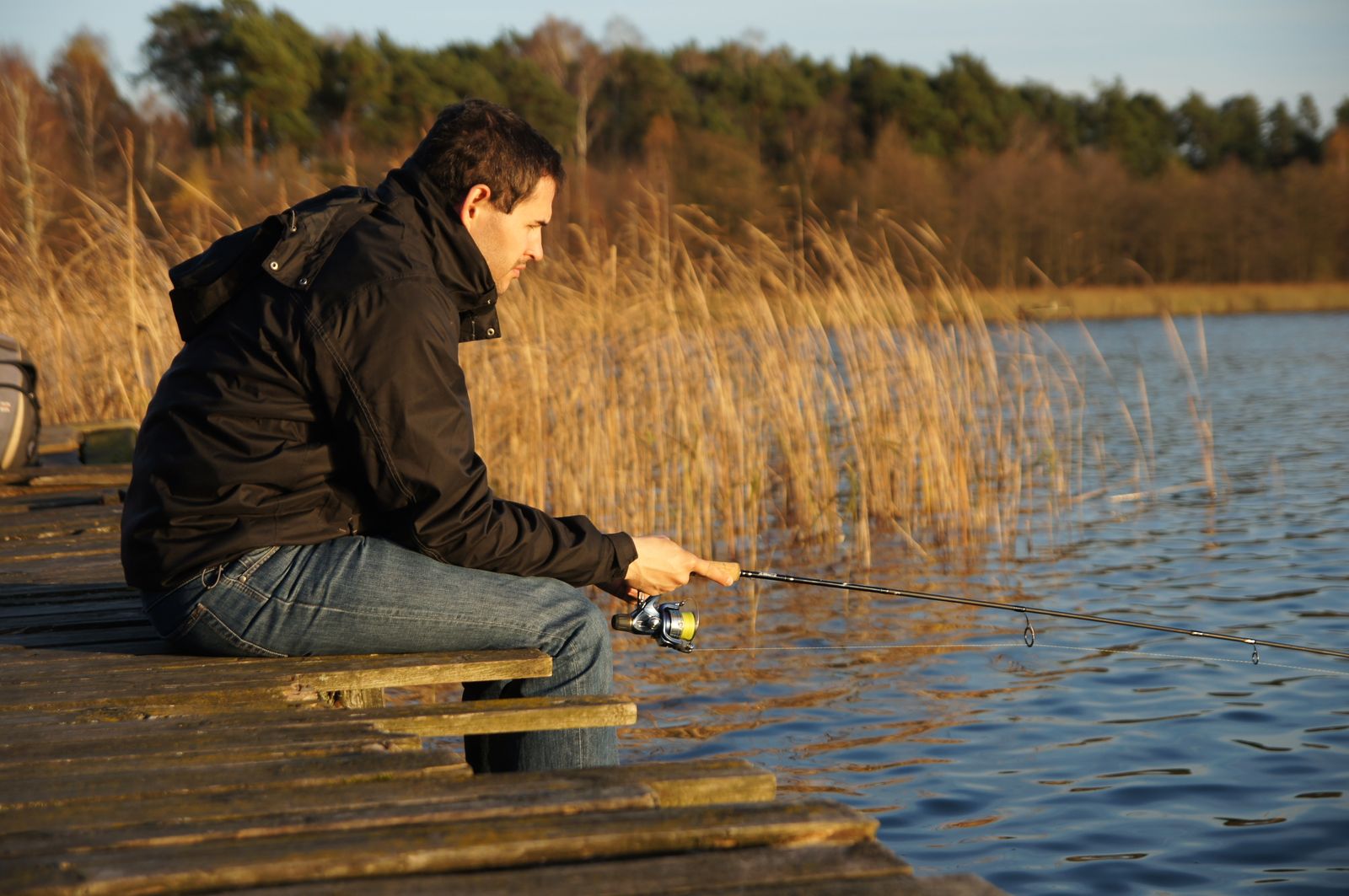
The License Requirement
Before casting a line, every angler age 16 and older in the United States must purchase a fishing license. Requirements vary significantly by state, so the first step is checking your state's fish and wildlife agency website. Costs range from roughly $27 to $62 annually for resident licenses, with non-resident licenses typically running higher. Many states offer short-term options—day licenses, three-day passes, or weekly permits—at a lower price point, making this an accessible entry point for a trial run.
Licensing exists to fund fish conservation and habitat management. The U.S. Fish & Wildlife Service maintains a directory of state licensing options, while individual state agencies handle sales. Purchase your license online, by phone, or at tackle shops before you go. Some states require additional permits or stamps for specific species, so confirm all local regulations before heading to the water.
Live bait is the beginner's advantage: cast, position, and wait. The bait's natural movement attracts fish instinctively, and even clumsy casting often succeeds.
Assembling a Beginner's Kit
You do not need expensive equipment to catch fish. A basic setup—a rod, reel, line, and terminal tackle—costs as little as $30 to $50 new, or even less secondhand. Take Me Fishing recommends starting with a spincast reel, which houses the line in a plastic cover to minimize tangles and operates with a simple thumb button.
For a beginner freshwater kit, assemble the following: a 5.5- to 6-foot spinning rod rated for 4–8 pound test line, a matched spinning reel with a smooth drag, 4–6 pound monofilament line, a small tackle box, needle-nose pliers or hemostats for hook removal, and a landing net (optional but helpful). Spincasting reels are forgiving and reliable for learning. If you later progress to baitcasting, expect a steeper learning curve—a gear ratio near 7:1 is ideal for a first baitcaster, according to experienced tackle guides—but the reward is increased accuracy and distance.
See the specifications table below for a sample starter kit with estimated costs and product categories.
Finding Water and Locating Fish
Lakes, ponds, and slow-moving rivers are ideal for beginners. You do not need a boat: many productive spots exist from shore, dock, or public pier. When you arrive at a lake or pond, look for structure—downed trees, lily pads, weed lines, or vegetation edges. Fish congregate where food is present, and streams feeding into a lake carry food and oxygen, making these areas productive. Bass, bluegill, crappie, and perch are forgiving species for new anglers.
State fish and wildlife agencies maintain databases of public fishing access areas. New York's DEC and the Washington Department of Fish & Wildlife provide searchable maps and public access lists. Start local—a nearby pond often holds fish and eliminates travel time. Many urban parks, county parks, and public lands permit fishing at no additional cost beyond your license.
Respect posted hours, stay off private land, and always leave the area cleaner than you found it. Pack out all trash, broken line, and bait containers.
Rigging Your Line and Tying Essential Knots
Once your rod and reel are assembled, attach the main line to the reel spool, then add a small barrel swivel to join your main line to a lighter leader—this protects your primary line if you snag. Tie the Palomar knot to secure your hook or lure; it is the strongest and easiest for beginners. The technique: double about 6 inches of line, thread it through the hook eye, tie an overhand knot with the doubled line (leaving the hook hanging loose), then pull the loop down and over the hook.
The Uni knot is equally reliable and works well with both monofilament and braided line. Before tightening any knot, wet it with water to reduce heat and friction, which can weaken the line. Pull the knot tight until it seats smoothly. For the Surgeon's knot, used to join two lines of different weights, practice both sides until the technique becomes automatic.
Review our detailed how-to-tie-a-fishing-knot article for step-by-step photos and variations. Consistent knot-tying prevents lost fish and broken line during critical moments.
You do not need expensive equipment to catch fish. A basic spincast setup costs as little as $30 to $50 new, with all the essentials included.
Casting and Retrieving
Casting with a spinning reel is the most intuitive method for beginners. Hold the rod with your dominant hand so the reel sits beneath the rod, your thumb on the handle and your index finger resting on the line in front of the reel. Use your other hand to flip the bail (the wire arm) open until it clicks. Raise the rod tip to roughly 2 o'clock (over your shoulder), then accelerate smoothly forward to the 10 o'clock position, releasing the line from under your index finger as you do. The momentum propels your bait or lure forward; the weight carries the line out.
When your rig lands, wind the reel handle one full turn—the bail will flip closed automatically. Now retrieve at a steady pace, keeping slight tension on the line. Feel for vibrations that signal a bite. If fishing with live bait, patience is key: cast, reel slowly, and hold steady. If using lures, experiment with speed and pauses to trigger strikes. Take Me Fishing's casting guide and our how-to-cast-a-baitcaster article provide detailed progressions.
Accuracy improves with repetition. Practice in your yard before heading to the water. Two-handed casting is more accurate than one-handed, especially when distance matters.
Bait and Lure Selection
Live bait is the beginner's advantage. Worms, minnows, crickets, and grasshoppers are available at most tackle shops and require minimal technique—cast, position your rod at a comfortable angle, and wait. The bait's natural movement attracts fish instinctively, and even clumsy casting often succeeds because the bait does the work.
Artificial lures demand more skill. You must control the retrieve's pace, depth, and action to trigger strikes. A beginner casting a worm-imitating plastic lure or small crankbait will succeed less consistently than one using live bait. Save artificial lures for later, once you understand how fish respond to different speeds and retrieves.
If starting with live bait, keep it lively in a cooler or bait bucket with aeration. Hook live fish through the lips or back, minimizing injury. Live shrimp, herring, or sand eels work for saltwater beginners; shiners, fathead minnows, and crawfish excel in freshwater. One dozen worms or a half-dozen minnows is enough for a productive half-day.
Handling, Releasing, and Respecting Fish
When a fish takes the bait, set the hook by raising the rod tip sharply to drive the hook home. Reel steadily to bring the fish in; keep the rod tip elevated to maintain line tension. As the fish nears you, prepare to land it with a net or by hand. Wet your hands first—the fish's slime coat protects it from infection and aids swimming, and a dry hand or towel removes this protection and causes damage.
Never grip a fish by the eyes or gills. Smaller fish (under 5 pounds) can be controlled by gently gripping the lower lip; larger fish must be supported horizontally with both hands beneath the body. Use needle-nose pliers or hemostats to back the hook out the way it went in. According to NOAA Fisheries best practices, keep air exposure under 60 seconds. Remove hooks while the fish remains in water whenever possible.
To release, gently place the fish in the water, supporting its midsection and tail until it swims away on its own. If the fish is exhausted, face it into the current or move it slowly back and forth to force water over its gills and revive it. Circle hooks or barbless hooks increase survival rates and simplify hook removal. Most beginners practice catch-and-release initially; always check local regulations to confirm what species you can keep and any size minimums.
Fishing Etiquette and Stewardship
On the water, respect others' space. Maintain at least 50 to 60 feet distance from other anglers on crowded water; on quiet lakes, give them more room. Cast away from their direction, keep noise low, and never position yourself directly upwind or upcurrent, which sends your disturbance toward them.
Pack out all trash—fishing line, lure packaging, bait containers, and food waste. Discarded monofilament line and hooks are hazardous to wildlife and other anglers. Never throw live bait into the water unless regulations permit it; sealed bait containers or dead bait should be removed from the lake.
Know and follow your state's fishing regulations. Size limits, season closures, and species restrictions exist to protect fisheries for future generations. If you keep a fish, kill it humanely and quickly. If you release, handle with care so it survives. Respecting the resource, the fish, and fellow anglers ensures that fishing remains available to all.