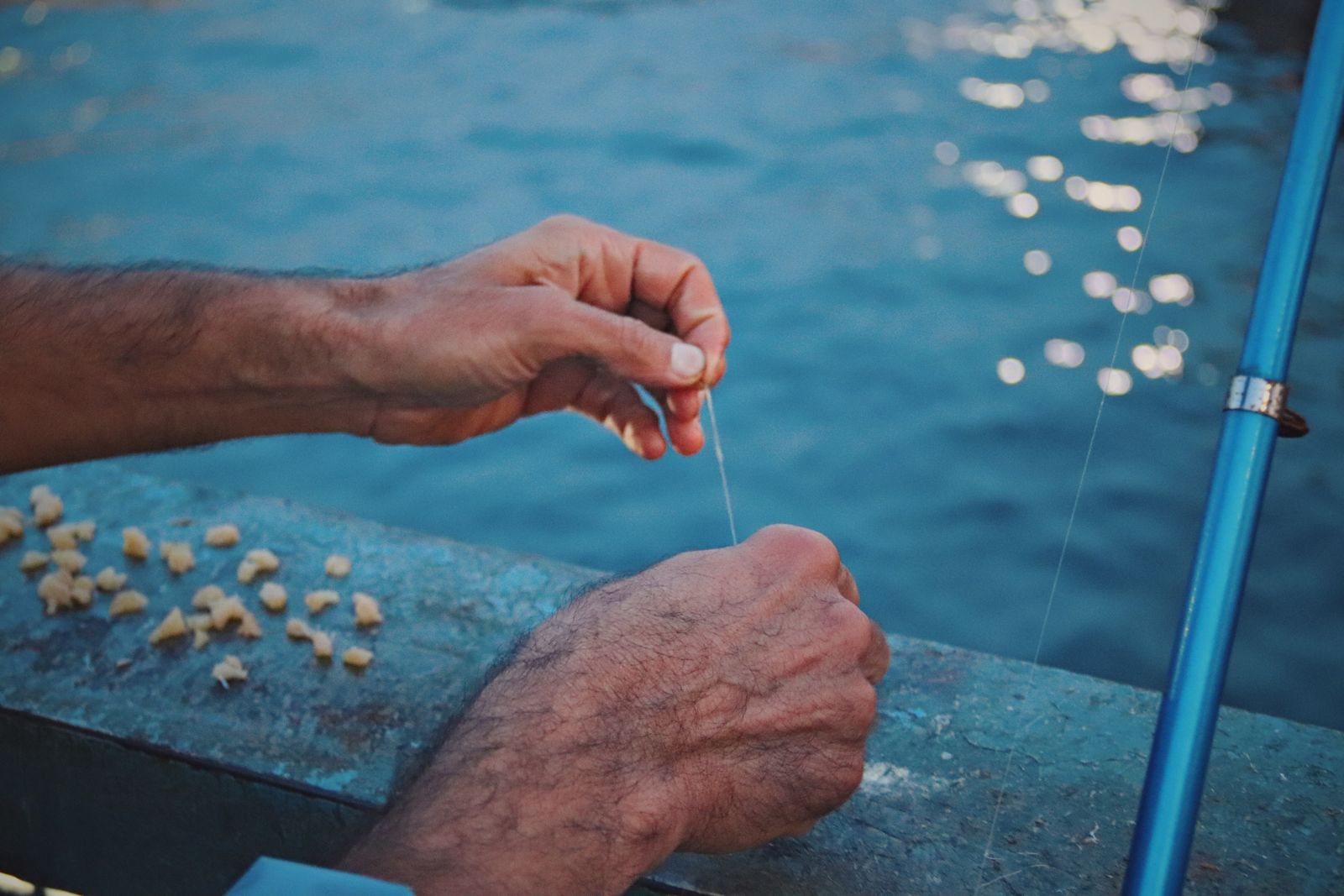
Why Knot Mastery Matters
The Oregon Department of Fish and Wildlife states plainly: "More fish are probably lost because of improperly tied knots than any other single reason." A 15-pound smallmouth that breaks free didn't snap the line—the knot failed. This happens because most anglers learn knots casually, forget the mechanics, and tie them carelessly under pressure.
Five knots cover virtually every freshwater and saltwater situation: the improved clinch for hooks and lures, the Palomar for braided line and heavy monofilament, the uni knot as a versatile workhorse, the Rapala loop for lure action, and the double uni for joining two lines. Learn these five thoroughly, practice them on spare line until they become automatic, and you'll put more fish in the cooler than 80% of anglers who cast near you.
The mechanics are identical across all five: form a correct loop structure, wrap precisely, wet the knot with saliva before tightening (friction heat weakens monofilament by up to 30%), and pull opposing line segments with steady pressure. The difference between a 85% strength knot and a 95% strength knot is often a single additional wrap or the willingness to wet before cinching.
More fish are lost because of improperly tied knots than any other single reason.
The Improved Clinch: The Universal Standard
The improved clinch is the most widely used fishing knot in the world, and with reason: it's simple, works from 2-pound ultralight to 20-pound test, and requires no special equipment. The U.S. Fish and Wildlife Service calls it "an old standby," and it remains the knot most state fish and wildlife departments recommend to beginners. It retains 85–95% of line strength when tied correctly.
**How to tie it:** Pass the line through the hook eye, leaving at least 6 inches of loose end. Wrap that loose end around the standing line 5–6 times (use fewer wraps with heavier line: four wraps with 14–20 lb., five with 8–12 lb., six with 2–6 lb.). Thread the loose end back through the loop near the eye, then thread it through the larger loop that forms. Wet the knot thoroughly with saliva. Pull the standing line and the main loop steadily until the knot seats tight against the hook eye, then trim the loose end close.
The distinguishing feature—the extra final tuck—improves holding strength during hard fights. Skip this step, and you've tied a regular clinch knot, which is weaker and more prone to slipping when you're setting a hook hard. This knot struggles with line heavier than 30 pounds; the wraps become too thick to bend properly.
**When to use it:** Any situation with monofilament or fluorocarbon to a hook, lure, or swivel under 20-pound test. It's the default for freshwater bass, trout, and panfish, and works for light saltwater.
The Palomar: Strongest and Fastest
The Palomar knot tests at 95–99% of rated line strength—the highest of any terminal knot—and takes roughly 10 seconds to tie. Take Me Fishing, the Recreational Boating and Fishing Foundation's educational resource, calls it one of the two essential knots every angler should know. Its genius lies in using a doubled line through the eye, which distributes stress across more fibers and works on monofilament, fluorocarbon, and braided line equally well.
**How to tie it:** Fold about 6 inches of line over itself. Pass the folded line through the hook eye. Tie a single overhand knot with the doubled line, just above the hook eye, leaving a couple of inches of slack below. Do not pull tight yet. Open the loop formed by the double line and slide it over the hook or lure. Pull both the standing line and tag end steadily to cinch the loop tight. Wet the knot before final tightening. Trim the tag end.
The Palomar works in near-darkness and stays reliable even when tied hastily. It's unforgiving of technique mistakes in other ways—if the loop doesn't clear the lure eye correctly, the knot fails—but once seated, it holds. For braided line, which is slick and nearly stretch-free, the Palomar is superior to the improved clinch because the thicker knot grips the smooth fibers better.
**When to use it:** Braided line to terminal tackle. Heavy monofilament (15 lb. and above). Any situation where maximum strength is non-negotiable. Fishing strength tests show the Palomar consistently breaking at 18–19 pounds on 20-pound test, compared to 17–17.5 pounds for the improved clinch on identical line and hook.
The Uni Knot: The Adjustable Problem-Solver
The uni knot (also called the Duncan knot or grinner knot) is the knot that solves problems. It ties as a sliding loop that you can position anywhere along the line, works with monofilament and braided line, and creates a small non-slip loop if left un-cinched. Animated Knots by Grog, the definitive animated knot reference, documents it as a snell knot, loop knot, and end-to-end join option.
**How to tie it:** Pass the line through the hook eye. Create a loop alongside the standing line with the loose end. Wrap the loose end around both the standing line and the loop five times. Wet the knot. Pull the loose end to tighten. The wraps will spiral along the standing line as you cinch. Once seated, you can slide the knot to adjust loop size or pull harder to cinch it completely against the hook eye.
The uni retains approximately 82% of line strength when tied around a hook eye. It's lower than the Palomar or improved clinch, but the tradeoff is versatility: the same knot can be left as a loop for livebait rigs (allowing the bait to move freely) or cinched tight for lures. Most anglers who fish livebait prefer the uni to any dedicated loop knot because one knot covers both applications.
**When to use it:** Livebait rigs where a small loop reduces friction at the hook eye. As a general-purpose knot in varied conditions. As a line-to-line connector (using a double uni, below) when joining monofilament to monofilament.
Friction heat from tightening weakens monofilament by as much as 30%—wet every knot before cinching.
The Rapala Loop: Unlocking Lure Action
The Rapala knot creates a small non-slip loop at the lure, allowing crankbaits, jerkbaits, and swimbaits to move with unconstrained action. Unlike a knot cinched tight to the lure eye, the Rapala loop lets the lure swing freely, producing noticeably more erratic, lifelike movement. Take Me Fishing's guide confirms the knot retains 95% of breaking strength while preserving lure action.
**How to tie it:** Tie a loose overhand knot in the standing line about 8 inches from the end; do not cinch it closed. Pass the tag end through the lure eye, then back through the overhand knot from the same side it entered. Wrap the tag end around the standing line three times above the overhand knot, moving away from the lure. Thread the tag end up through the bottom of the original overhand loop. Pass the tag end through the new loop formed above the original one. Wet the knot. Pull the standing line and the lure in opposite directions to cinch.
This knot is more involved than the improved clinch, but the payoff is immediate: a crankbait tied with a Rapala loop produces action 20–30% more erratic than the same lure cinched tight. Walleye, largemouth bass, and pike respond noticeably to this added movement, especially in low-light conditions or dingy water.
**When to use it:** Any hard-bodied lure where maximum action matters: crankbaits, jerkbaits, walking topwater plugs, swimbaits. Not necessary for soft plastics on jigheads, which already move freely. The Rapala loop works on both monofilament and fluorocarbon.
The Double Uni: Joining Two Lines of Different Diameters
When you need to connect a braided mainline to a fluorocarbon leader (a setup essential for saltwater and heavy-cover bass fishing), the double uni knot holds at 90–100% of the weaker line's breaking strength. It's simply two uni knots, one on each line, cinched together until they nest into a single, compact connection. Take Me Fishing's guide confirms it as the standard for leader-to-mainline joins in modern fishing.
**How to tie it:** Overlap the two lines (braided and fluorocarbon, or mono and fluoro) by 5–6 inches. Using the tag end of the braided line, wrap it around both lines four times (or eight times if using braided line; braided doesn't grip like mono). Thread the tag end through the loop formed. Repeat on the opposite side with the fluorocarbon line using the same wrap count. Wet both knots with saliva. Pull the standing lines apart, and the two uni knots will slide together until they nest.
The beauty of the double uni is that it works regardless of line-diameter mismatch. A 50-pound braided line to a 20-pound fluorocarbon leader connects cleanly with this knot. For saltwater, where the braided line is nearly indestructible and the leader is your sacrificial element, the double uni is the industry standard. Many match-the-diameter alternatives (like the blood knot) require more precision and fail more often.
**When to use it:** Joining a braided mainline to a mono or fluorocarbon leader. Connecting two monofilament lines of different weights. Any situation where two lines of unequal diameter need a reliable connection. Testing shows it holds across freshwater and saltwater applications.
Seating and Wetting: Why They Make or Break the Knot
Friction heat from tightening weakens monofilament and fluorocarbon by as much as 30%, according to state fish and wildlife testing. The solution is simple: wet every knot with saliva before final tightening. Saliva cools the knot as it cinches, reduces friction, and allows the line to seat more evenly. Dry tightening is why casual anglers lose fish that "break" line—the knot was structurally sound but heat-weakened.
Seating means pulling all line segments entering and exiting the knot. For the improved clinch, pull the standing line and the main loop. For the Palomar, pull the standing line and tag end steadily until the loop is gone and the knot sits against the hook eye. Partial tightening—pulling only one segment—leaves slack in the knot structure, and that slack causes slipping.
Oregon's Department of Fish and Wildlife recommends a pre-cast test: wrap the hook bend around a ring and pull the tippet hard before fishing. If the knot slips or the line breaks in the knot rather than at the break, re-tie it. This 30-second habit catches mistakes before the fish do.
Salt water demands extra attention: braided line requires more wraps (often double the count used on mono), and fluorocarbon is less forgiving of being pulled dry-tight because it's stiffer and less elastic. Always carry a water bottle or, at minimum, spit before tightening every knot on the water.