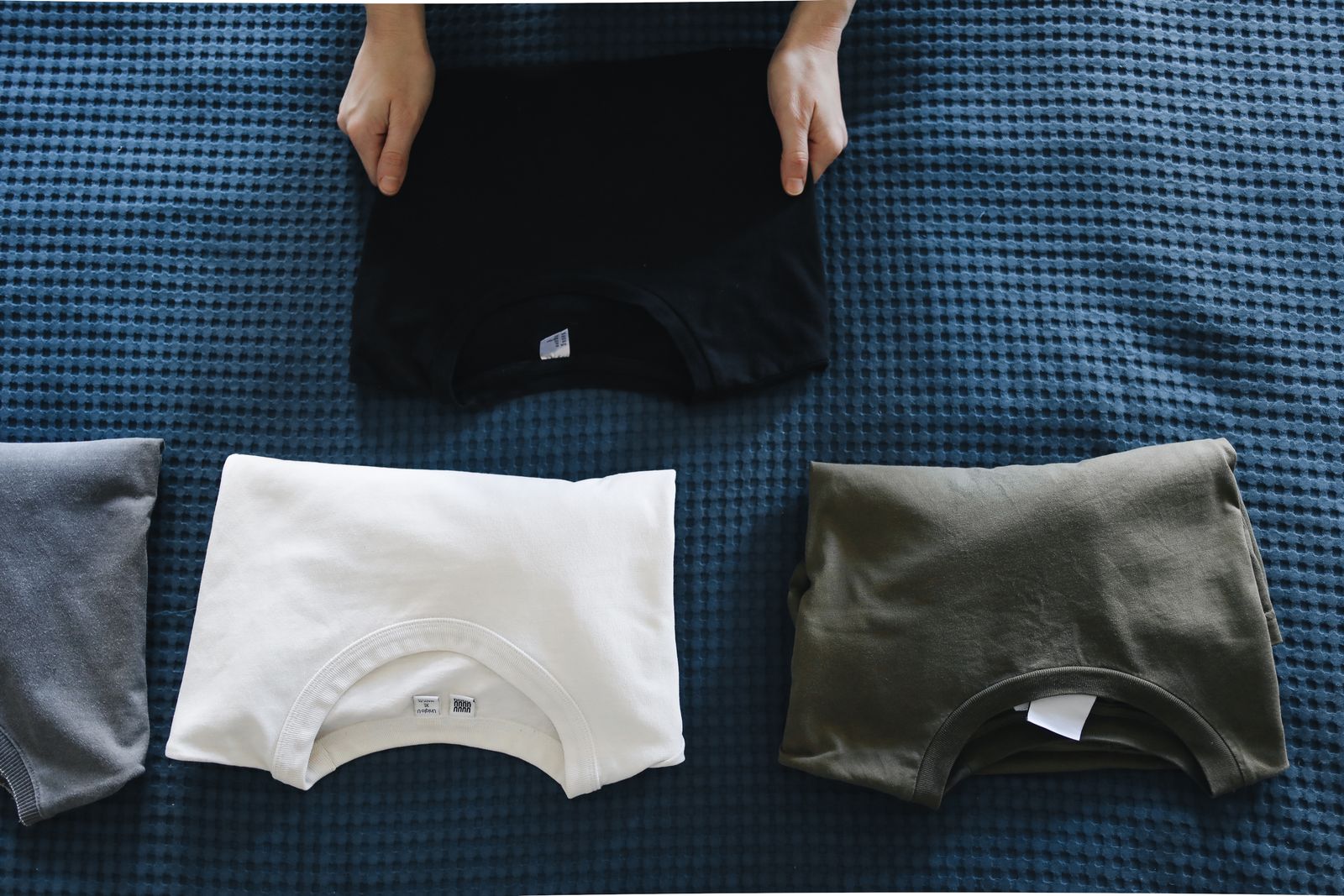
Why the fold matters
A dress shirt packed loose will arrive wrinkled. A dress shirt packed carelessly will arrive creased beyond redemption. The difference between the two lies in how the folds are executed. Fabric has memory—it holds the shape imposed on it. When you fold precisely, with clean lines and deliberate angles, the shirt compresses into a compact package that resists the pressure of a packed suitcase. When you fold haphazardly, the fibers fold against themselves at angles, trapping permanent creases. The point of technique is not to eliminate wrinkles entirely (no fold method does that), but to reduce them to the level a light iron or steamer can dispatch in under a minute.
Cotton and linen—the preferred fibers in quality dress shirts—wrinkle more readily than technical blends because their short fibers don't bounce back after compression. High-quality dress shirts accept a professional fold in exchange for the crisp, durable appearance they deliver in wear. The method described below works for 100% cotton, cotton-blend, and linen dress shirts. It takes about two minutes to execute correctly the first few times; after that, under 90 seconds.
Button the shirt completely—every button, including the top collar button. Buttonholing holds the fabric in alignment and prevents the collar points from flaring as you work.
Step 1: Button the shirt and lay it face-down
Place the shirt on a clean, flat surface—a bed, table, or counter—with enough room to work. Button the shirt completely: every button, including the top collar button and the bottom button at the hem. Buttonholing holds the fabric in alignment and prevents the collar points from flaring and the front placket from twisting as you work.
Lay the shirt face-down (back facing up). Smooth your hands across the back and sleeves to remove wrinkles, working from the collar down. This step matters. Any wrinkle you leave now will harden into a permanent crease once the shirt is folded and packed. Take 15 seconds here.
Step 2: Fold and tuck the sleeves
Take the right sleeve at the cuff and fold it straight back across the shirt's back, aligning the sleeve's outside edge with the spine (the centerline between the shoulder blades). The fold line should run from the armpit straight to the collar. Your goal is a clean 90-degree angle at the shoulder—the sleeve now lies flat against the back, running parallel to the body.
Next, fold the sleeve upward at approximately a 60-degree angle, so that the cuff aligns with or slightly overlaps the opposite shoulder. The cuff should angle toward the collar. Do not fold it flat against the back; the angle is critical. Repeat the process with the left sleeve: fold it straight back, then fold it upward at 60 degrees so both cuffs now sit near the collar. The sleeves should create an overlapping X pattern when viewed from above. According to Gentleman's Gazette, this technique 'protects the sleeve cuffs and prevents the delicate fabric from creasing along stress points.'
Step 3: Fold the sides inward
With both sleeves now tucked and angled toward the collar, fold the right side of the shirt inward along a vertical line roughly one inch from the centerline. The fold should run from the collar straight down to the hem. Fold it so the right edge of the shirt meets or slightly overlaps the centerline. The sleeve ends and the right shoulder are now enclosed.
Repeat on the left side, folding the left edge inward so it overlaps the right side. The shirt is now compressed to roughly half its original width. All fabric layers—back, sleeves, and sides—are now neatly stacked. The front of the shirt still faces down; you have not flipped it.
Tissue paper absorbs moisture and redistributes pressure away from fold lines. When sealed in a plastic bag, a properly folded and tissue-wrapped shirt will arrive wrinkle-free through even rough baggage handling.
Step 4: Fold the bottom up, then the top down
Fold the bottom third of the shirt upward, creasing cleanly where the hem meets the middle section. The fold line should run horizontally across the widest part of the shirt's lower body. Press firmly to establish the crease.
Now fold the top third (the collar and shoulder section) downward, so the collar points now face the folded hem. The first folded edge—the top of the collar—should land just below the folded hem, creating a tight rectangular package. You have now folded the shirt into thirds: top third folded down, bottom third folded up, with the middle section as the core. The result is a compact rectangle roughly 15 × 9 inches, depending on the shirt's size. Articles of Style notes that 'the final fold should land just below the collar, trapping all loose edges and preventing the shirt from unfolding during transit.'
The tissue-paper trick for travel
For drawer storage, the fold above is sufficient. For suitcase packing, add tissue paper. Before folding, lay two or three sheets of tissue paper on your work surface, then place the shirt on top. As you fold through steps 2 and 3, insert additional sheets of tissue paper at each fold line—between the sleeves and the body, between the folded sides. The tissue acts as a buffer, preventing the fabric from creasing sharply at pressure points.
Once the shirt is folded, wrap the completed package loosely in one or two additional sheets. The tissue paper absorbs moisture and redistributes pressure away from the fold lines. When packing into a suitcase, place the folded shirt inside a gallon-size ziplock bag (or a larger seal bag if the shirt is oversized), squeeze out excess air so the shirt is snug but not crushed, and seal it. Gentlemen's Gazette reports that this method keeps a shirt wrinkle-free through even rough baggage handling. The plastic bag prevents friction and moisture absorption from surrounding luggage.
Unpacking and revival
When you arrive at your destination, remove the shirt from the bag immediately and hang it on a wooden hanger in a well-ventilated space. If wrinkles are visible (they likely will be), hang the shirt in the bathroom while you shower; the steam from a hot shower will relax the fibers and reduce creasing within 10 to 15 minutes. Alternatively, use a handheld garment steamer or a hotel iron on low heat. For traveling with a carry-on, pack the folded shirt in a garment sleeve designed for dress shirts; these protective bags hang in the closet and keep the shirt flat without the bulk of a full suitcase.
Do not store a dress shirt folded for longer than two weeks. Fibers begin to 'set' permanently after extended compression. After that window, hang the shirt to restore its shape and allow the fibers to recover.