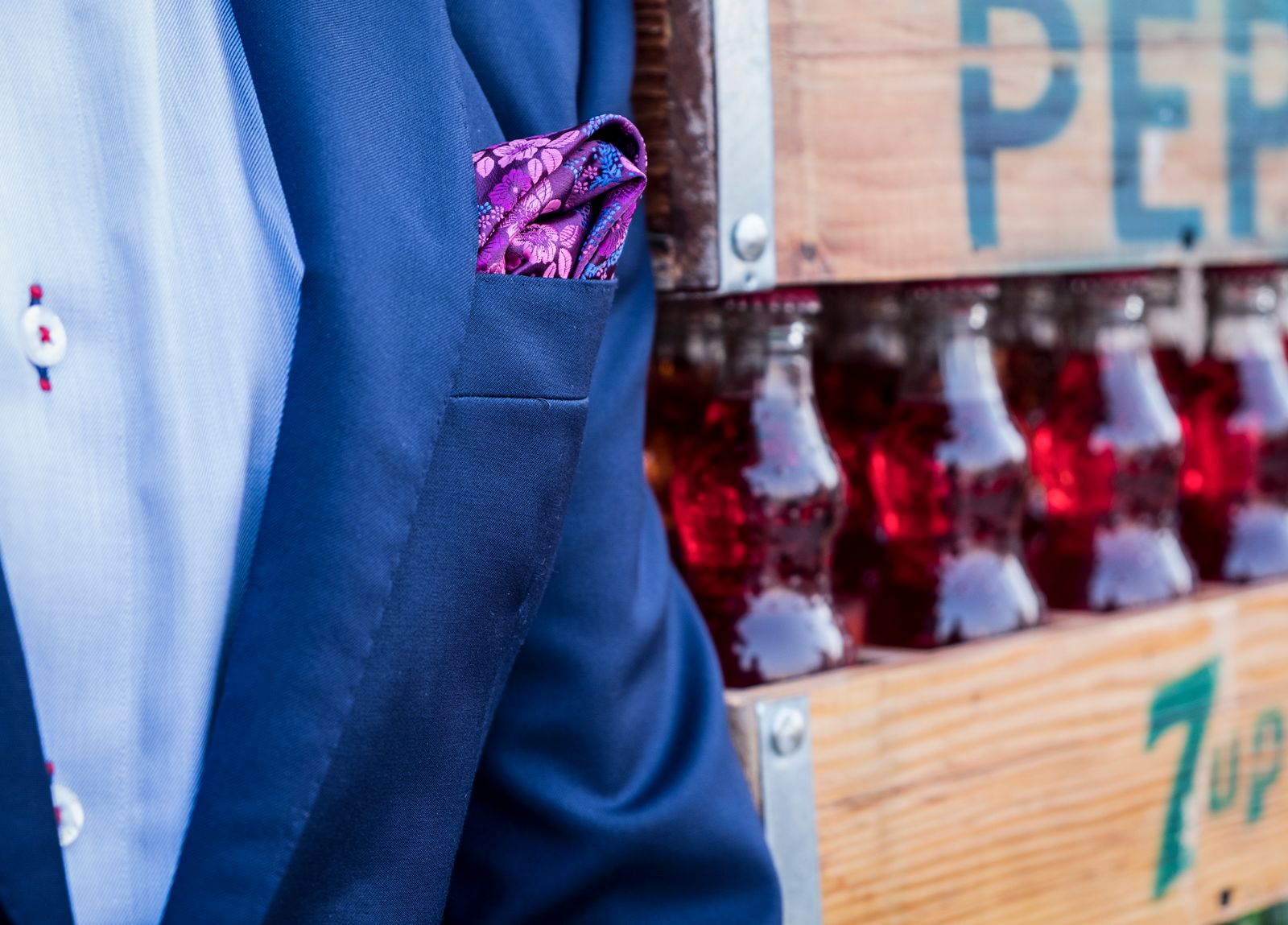
The Pocket Square as Finishing Detail
A pocket square is a deliberate choice. Unlike a tie—which announces itself with color and pattern—a pocket square whispers. It signals that a man has considered the details of his appearance, that he knows the difference between sloppiness and refinement.
The pocket square emerged in formal menswear during the 1920s, when the two-piece suit became standard. Before the 1950s, when disposable tissue became the norm, gentlemen carried two handkerchiefs: one in the pants pocket for use, and one in the chest pocket for display. The accessory has since become purely decorative, yet the rules governing it remain strict. Per Gentleman's Gazette, how a square is folded greatly influences its appearance—it can emphasize soft rolls or elegant points, control how much a pattern is displayed, and generally influence formality and mood.
The fold itself communicates. A sharp, geometric fold says discipline and formality. A soft puff says ease and confidence. Understanding which fold to deploy, and why, separates the thoughtful dresser from the man who simply shoves a square into his pocket.
A pocket square is a deliberate choice. Unlike a tie—which announces itself with color and pattern—a pocket square whispers.
The Presidential Fold: Formal and Disciplined
The Presidential Fold—also called the TV Fold or Square Fold—is the standard for formal occasions: board meetings, weddings, funerals, and black-tie events. It produces a thin, squared edge that shows minimally from the pocket, typically ¼ to ½ inch of fabric visible.
To execute the fold: Lay the square flat on a clean surface. Fold it in half horizontally, creating a rectangle. Rotate the rectangle 90 degrees and fold it in half again horizontally, creating a longer, narrower rectangle. Fold one final time horizontally, creating a rectangle slightly wider than the width of your jacket pocket. The result should be a compact, squared-off bundle that tucks into the breast pocket, with only a thin line of fabric showing.
This fold demands linen or a linen-blend square. Silk is too soft; it will not hold the crisp edges required. A white linen pocket square with the Presidential Fold remains the most conservative choice for black-tie and formal evening wear. For daytime business, a solid navy, burgundy, or charcoal works. The key rule: do not match your pocket square exactly to your tie. If your tie is navy, choose a burgundy square, or cream with subtle red accents. Exact matching appears accidental rather than deliberate.
The One-Point and Two-Point Folds: The Middle Ground
Between the formality of the Presidential Fold and the casualness of the puff lies a category of folds that display points or peaks. The One-Point Fold creates a single triangular point; the Two-Point Fold creates two peaks.
For the One-Point Fold: Lay the square flat. Fold it in half diagonally to create a triangle. Fold the left corner to the center, then fold the right corner to the center, creating a wider triangle with points stacked. Tuck the bundle into your pocket so one point extends upward, typically ½ to ¾ inch visible.
For the Two-Point Fold: Fold the square in half diagonally, then fold the left corner to the center and the right corner to the center as before. Adjust so two points extend upward from the pocket edge, spaced slightly apart. Per Rampley and Co, one to two-point folds suit formal occasions while still allowing slightly more visual interest than the Presidential Fold.
These folds work with both silk and linen. Silk drapes softly and works for business and semi-formal settings. Linen holds crisp points and is better for warmer months and less formal daytime wear. Patterned squares shine here—small prints, subtle textures, and even modest color combinations can be displayed without appearing flashy. These folds signal that a man understands the rules enough to bend them slightly, a mark of real taste.
The Puff Fold: Casual and Confident
The Puff Fold is the most forgiving and visually distinctive. It creates a soft, rounded peak that extends from the pocket, resembling a small crown. It works for everyday wear, business casual, and informal social settings. It should not appear at black-tie events or formal dinners.
To execute: Lay the square flat. Pinch the center of the square between your thumb and forefinger. Lift it, allowing the fabric to bunch and fold around your pinched fingers. Hold the gathered fabric at the base and twist gently to secure the bundle. Tuck the twisted base into your pocket, positioning the puffed top so it rises ½ to 1 inch above the pocket edge.
The Puff Fold showcases silk beautifully. The fabric's natural sheen catches light, and the fold's soft curves create movement and texture. Patterned silks—paisley, small florals, subtle geometrics—all work here because the fold itself controls the display. Linen puffs are possible but less elegant; the fabric is too stiff and creates an awkward, bunched appearance. Cotton is the budget option but lacks the visual depth of silk.
A critical rule: the pocket square should complement your outfit, not match it exactly. Gentleman's Gazette notes that the more visually complicated a fold is, the more casual it is. The Puff Fold, being the most textured and organic, is the most casual and therefore permits more adventurous color and pattern pairing. A burgundy tie pairs well with a cream puff, or a navy tie with a subtle red-and-white patterned puff.
The fold you choose should reflect the formality of the occasion and the message you wish to send.
Fabric Selection: The Foundation of the Fold
The fabric you choose determines which folds work and how long they last. Silk is the most popular choice for pocket squares. It has a natural sheen that catches light beautifully, drapes softly, and works across almost every occasion. Silk holds puffs and gentle folds; it does not hold aggressive geometric creases unless combined with linen.
Linen holds a crease like no other fabric. It is your best friend if you want sharp, architectural folds like the Presidential, two-point, or three-point folds. Linen is lightweight and breathable, making it ideal for warm months and daytime wear. However, linen wrinkles readily and requires ironing before each wear.
Wool-silk blends offer versatility year-round, with nice texture and moderate crease-holding. Cotton is the most affordable option but the least prestigious; it lacks the visual depth of silk and the crispness of linen. Linen-cotton blends can work for casual, unstructured folds, but they feel less refined.
Size matters. A standard pocket square measures 16 to 17 inches per side. Silk squares should be at least 16 inches to prevent slipping in the pocket. Smaller squares are difficult to fold and prone to disappearing into the jacket. Hand-rolled edges are the mark of quality; they prevent fraying and create a refined finish. Avoid squares with sewn edges; they feel stiff and industrial.
The Styling Rule That Separates Amateurs From Professionals
The single most common mistake in pocket square styling is matching it exactly to the tie. A navy tie paired with a navy pocket square appears haphazard, as if the wearer grabbed the first two navy objects available. Instead, select a secondary color from your tie as your pocket square's primary shade, or choose a complementary color entirely.
Example pairings: A burgundy tie with a cream pocket square. A navy tie with a subtle rust-and-cream patterned square. A charcoal tie with a pale blue square. A patterned tie demands a solid pocket square, and vice versa. If your tie is patterned, your square should be solid—or at most, a quiet secondary pattern that does not compete. This principle of complementary contrast, rather than matching, is what Rampley and Co emphasizes when advising that your tie and square should not be identical fabrics.
White is the universal partner. A white linen or silk pocket square works with any tie, any suit, and any shirt. It is not boring; it is bulletproof. If you own only one pocket square, make it white silk in a puff fold. If you own three, add a burgundy silk and a navy linen. If you own ten, you have the confidence to experiment, but the rule remains: complement, do not match.
A Quick Reference for Fold Selection
The fold you choose should reflect the formality of the occasion and the message you wish to send. The Presidential Fold signals formality, discipline, and respect for the dress code. It belongs at black-tie events, formal weddings, and important business meetings. The One-Point and Two-Point Folds occupy the middle ground, suitable for business settings, semi-formal events, and daytime occasions where you want to signal that you understand the rules well enough to apply them with nuance. The Puff Fold is casual and confident, appropriate for business casual, informal gatherings, and everyday wear where you wish to add a touch of personality without appearing careless. In all cases, remember that the pocket square is visible from a distance of about 18 inches—closer than most people will ever stand to your outfit. It is a detail for those who notice details. Fold it with intention.