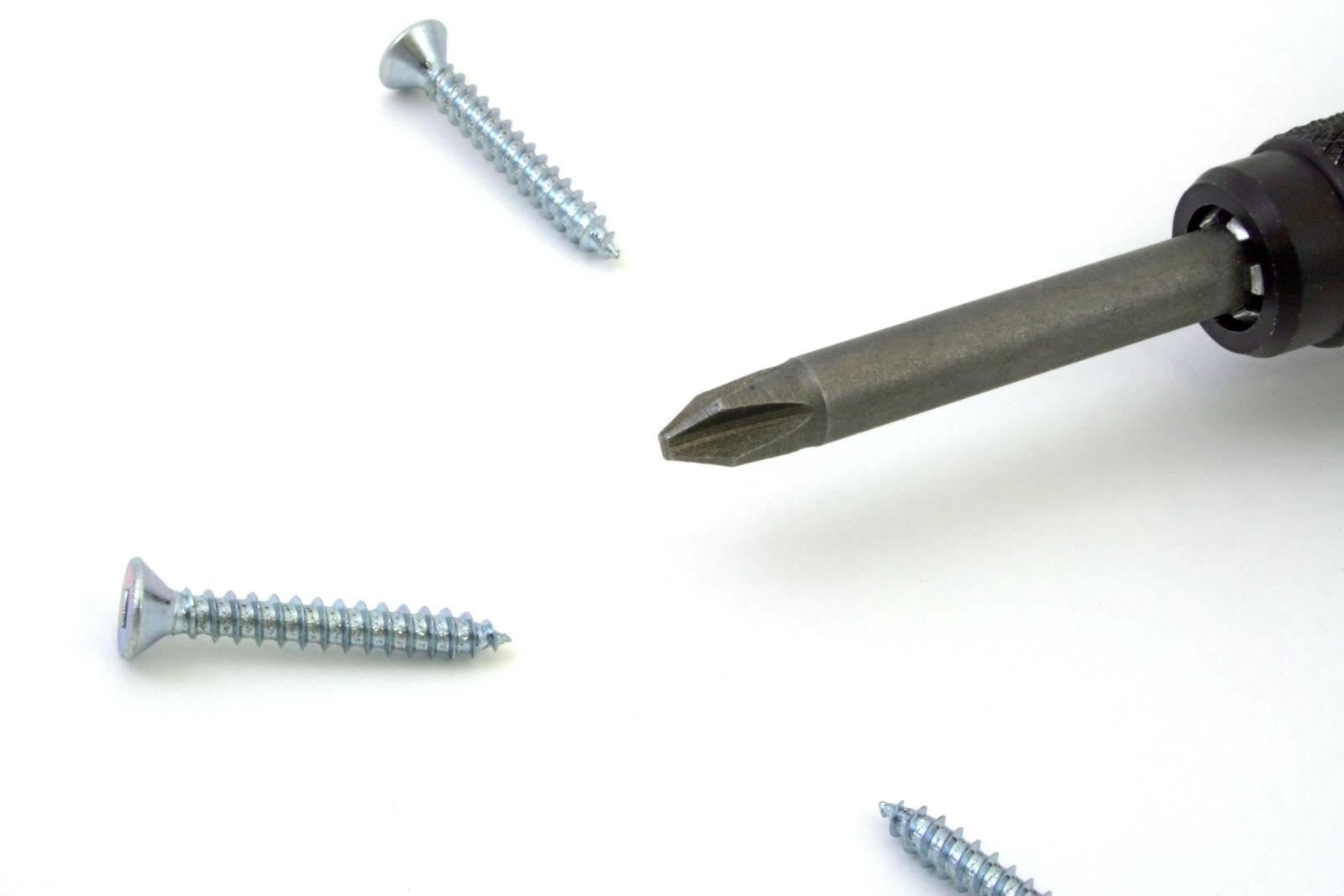
The short answer
To remove a stripped screw, first add grip: press a wide rubber band over the head and turn slowly with a snug driver. If that fails, grab a protruding head with locking pliers, cut a fresh slot with a rotary tool, or drill a pilot hole and back it out with a screw extractor or left-hand bit.
Every method past the rubber band leaves a mark, so start gentle and escalate only as far as the screw forces you to.
Method 1: Rubber band over the head (try this first)
Best for: lightly stripped Phillips or flat heads where the recess still has some shape, especially on furniture, appliances, and electronics. It costs nothing and risks no damage, so it should be your first move.
The rubber band fills the chewed-out gaps in the recess, giving the driver tip something to bite. As iFixit's repair community notes, a thick band pressed into the head lets the driver re-engage the screw.
Steps: 1) Lay a wide, thick rubber band flat over the screw head. 2) Seat your best-fitting driver bit firmly into the head, sandwiching the band. 3) Push down hard and turn counter-clockwise, slow and steady. 4) Expect to burn through a few bands. If you have none, a small square of steel wool or the scratchy side of a sponge works the same way.
Method 2: Liquid grip or abrasive drops
Best for: screws that are close to gripping but slip at the last second, and any case where you want more bite without altering the head. This is the pro's version of the rubber-band trick.
A drop of grit between the driver and the head creates a high-friction layer. Per Bob Vila, commercial 'screw grip' fluids carry tiny crystals that anchor between the bit and the screw. Mechanics and aircraft techs do the same with valve-grinding compound from any auto-parts store.
Steps: 1) Dab a small amount of liquid abrasive or valve-grinding compound onto your driver tip. 2) Press the bit firmly into the head. 3) Turn slowly counter-clockwise with heavy downward pressure. 4) Wipe the compound off your bit afterward, or the grit will wear down your other bits over time.
Rushing strips heads. Patience backs them out.
Method 3: Locking pliers on a protruding head
Best for: screws that stand proud of the surface enough to grab, such as deck screws, hinge screws, or anything not driven flush. This is often the fastest fix of all.
When the head sticks up, you can ignore the stripped recess entirely and turn the screw by its outside edge. This Old House advises gripping a protruding head with self-locking pliers and twisting the screw out.
Steps: 1) Clamp locking pliers (vise-grips) onto the screw head as tightly as they will go. 2) Adjust the jaw screw so the pliers bite, not slip. 3) Turn the whole tool counter-clockwise with steady force. 4) If the screw starts but stops, re-clamp lower on the head for a fresh grip.
Method 4: Cut a new slot with a rotary tool
Best for: an accessible head that is too rounded to grip but still sits flat or proud, where you don't mind a bit of cosmetic damage. Turns any mangled screw into a usable flathead.
A thin cutoff wheel carves a fresh, straight-walled groove a flathead driver can drop into. Both Bob Vila and iFixit's top-voted answer recommend a rotary tool (such as a Dremel) with a metal-cutting disc for this.
Steps: 1) Fit a thin cutoff wheel to the rotary tool and wear eye protection. 2) Cut one straight, square groove across the center of the head, going deep enough to grip but not so deep you weaken the head. 3) Seat a flathead driver that fills the new slot. 4) Press down hard and turn slowly counter-clockwise.
If the head sticks up at all, ignore the chewed-out recess and grab it with locking pliers.
Method 5: Screw extractor (easy-out)
Best for: badly stripped or seized screws that are flush or recessed, where grip tricks have failed. A 10-piece extractor and left-hand bit set runs about $10 to $20 and is the most reliable method for stubborn fasteners.
An extractor uses reverse-cut threads that bite deeper as you turn counter-clockwise, backing the screw out as it grabs. This Old House pairs it with a cordless drill set in reverse.
Steps: 1) Center-punch the screw head to keep the bit from wandering. 2) Drill a small pilot hole straight down the center of the head; use cutting oil and slow speed on metal screws. 3) Insert the matching extractor into the pilot hole. 4) Turn counter-clockwise with steady pressure until the threads grab and the screw backs out. If the head has snapped off, a hollow-boring extractor can drill out the whole shank.
Method 6: Left-hand drill bit
Best for: metal screws and bolts that are rust-frozen or torqued in hard, often the last step before a full extractor. Frequently the screw spins right out before you even need the extractor.
Left-hand bits cut counter-clockwise, the same direction you loosen a screw, so the heat and bite of drilling can break it free and walk it out on its own.
Steps: 1) Set your drill to reverse. 2) Choose a left-hand bit slightly smaller than the screw head. 3) Drill slowly into the center of the head with firm downward pressure. 4) Often the bit catches and spins the screw out; if not, you now have a clean pilot hole for a screw extractor. For rusted screws, This Old House suggests first soaking with a penetrating oil like Liquid Wrench and rapping the head with a hammer and nail set to shock the corrosion loose.
Which method to try first, by situation
Head sticks up off the surface: locking pliers. It is the fastest and does the least damage.
Lightly stripped, still some shape in the recess: rubber band, then liquid grip or abrasive drops.
Rounded but accessible head: cut a new slot with a rotary tool and use a flathead.
Flush or deeply stripped and stubborn: drill a pilot hole and use a screw extractor.
Metal, rusted, or seized solid: penetrating oil first, then a left-hand drill bit, then the extractor if needed.
Work up the list from least to most aggressive. The order matters: every method past the rubber band leaves a mark, so start gentle and escalate only as far as the screw forces you to. Patience here is the whole job. If a stuck fastener has you under the hood, the same calm-and-escalate approach applies to bigger jobs too, like learning how to jump-start a car.