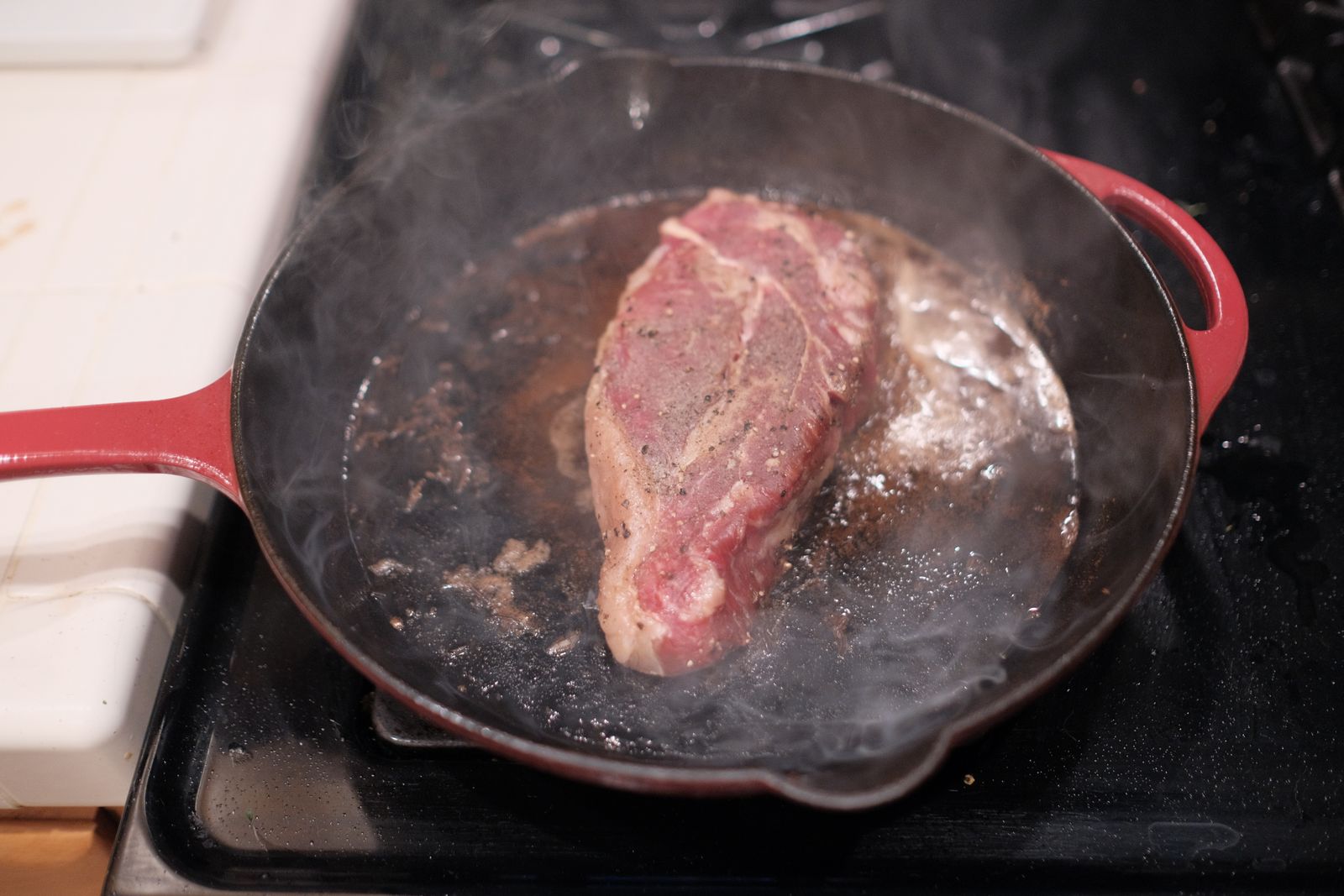
What seasoning actually is (and why soap won't kill it)
Seasoning is not a thin layer of oil sitting on the surface—it's polymerized fat, a plastic-like coating formed when fatty acids are heated past their smoke point and bond chemically to the iron. According to America's Test Kitchen, polymerization involves 'the linking together of hundreds of molecules through the formation of new chemical bonds between the fatty acids in the oil.' This coating is durable enough to withstand dish soap and heat; the old wives' tale about never using soap originated when lyes were common in detergents and actually did strip seasoning. Modern soaps are mild degreasers that pose no risk to a well-polymerized surface. The seasoning layer creates a nonstick surface not through perpetual oil, but through a stable, hardened material that resists water and enables the browning reactions necessary for flavor development.
The thickness of seasoning matters far less than the evenness. A single thin layer, properly polymerized, will perform better than multiple heavy applications that peel or flake. The goal is a uniform, black patina—not a glossy sheen.
Seasoning is not a thin layer of oil sitting on the surface—it's polymerized fat, a plastic-like coating formed when fatty acids are heated past their smoke point and bond chemically to the iron.
The seasoning process: wash, oil, bake, repeat
Seasoning begins with a clean surface. Wash the pan in hot water with dish soap and a stiff brush or cloth, removing all food residue, rust dust, or mill scale (the dark oxide coating on new unseasoned pans). Dry the pan immediately with a lint-free cloth or paper towel—water left to evaporate will cause rust pitting. Moisture is the enemy of cast iron.
Next, apply a thin layer of oil to every surface: the cooking side, the underside, the handle, even the lid. The temptation is to overdo it; resist. A thin coat means the pan should look nearly dry after wiping—so thin that if tilted, the oil will not run or drip. Excess oil pools in low spots and polymerizes unevenly, creating a sticky residue rather than a hard coating. Lodge Cast Iron recommends vegetable oil, canola oil, melted shortening, or their proprietary seasoning spray. These oils have high smoke points (above 400°F), allowing them to polymerize without burning into flaky carbon.
Preheat the oven to 450–500°F. Place the oiled pan upside down on the center rack—upside-down prevents pooling—and position a sheet of aluminum foil on the lower rack to catch any excess oil drips. Bake for one hour. The pan will reach the oil's smoke point, triggering rapid oxidation and polymerization. After one hour, turn off the heat and allow the pan to cool inside the oven. This slow cooling allows the polymers to set and adhere fully. Once cool enough to handle, wipe the pan with a dry cloth to remove any excess residue.
Repeat this process three to seven times for a new pan. Each cycle adds a layer of protection. After the third cycle, most users notice a visible darkening and the beginnings of a true nonstick surface. By the seventh, the pan is well-seasoned and ready for daily use. Existing well-seasoned pans benefit from this oven-seasoning only occasionally—perhaps once a year if heavily used—because cooking itself builds and maintains the seasoning layer.
Daily maintenance: how to preserve the finish
The most effective seasoning occurs during cooking. Each use, if done right, adds microscopic layers of polymerized fat to the surface. Cook with butter, lard, or vegetable oil whenever possible; avoid cooking with water or acidic liquids as the only cooking medium. A little acid (tomato sauce, vinegar, wine) during a short meal is harmless to a well-seasoned pan; extended cooking of highly acidic foods can strip a thin layer of seasoning, but this is reversible with one oven-seasoning cycle.
Clean the pan immediately after use, while still warm. Use hot water and a cloth or soft brush, avoiding metal scouring pads and abrasive scrubbers. If food has stuck, a paste of coarse salt and a little oil provides gentle abrasion without damaging the seasoning—the salt acts as a mild scrub, and the oil prevents the surface from drying. Dry the pan with a cloth or paper towel at once. If water sits on the surface or the pan is left to air-dry, rust will form in hours, and the seasoning layer itself can flake.
After each use, apply a thin coat of oil to a warm (not hot) pan. This 'seasoning coat' need not be heavy—a single light wipe with an oiled cloth is sufficient. This practice maintains the nonstick surface between oven-seasoning cycles and prevents the pan from becoming sticky or sticky-prone during storage.
Store the pan in a cool, dry place. Do not stack bare cast iron directly on other cast iron; the surfaces will stick and the seasoning will be damaged. Use paper towels or cloth between layers, or store pans upright.
The thickness of seasoning matters far less than the evenness. A single thin layer, properly polymerized, will perform better than multiple heavy applications that peel or flake.
Reseasoning rust and damage
Cast iron is remarkably forgiving. A rust spot or a patch where seasoning has flaked does not require replacement; it requires reseasoning. If rust is present, use a cloth or fine steel wool to gently remove the surface rust, then proceed with the standard seasoning cycle—wash, thin oil coat, bake at 450–500°F for one hour. If large areas have lost seasoning (bare, gray iron visible), one oven-seasoning cycle will not restore it; use three to five cycles instead, waiting for the pan to cool between each.
Deep, stubborn rust can be removed with a paste of white vinegar and baking soda, or with a wire brush and elbow grease. The vinegar will temporarily strip seasoning near the rust site, but this is acceptable because the rust must be removed first. After rust removal, proceed with oven-seasoning to rebuild the surface.
Do not use the dishwasher, do not soak the pan overnight, and do not use harsh chemicals or oven cleaner on cast iron. These practices will accelerate rust and damage the seasoning irreparably. Cast iron's longevity rests on simple care: wash, dry, oil, protect from prolonged water exposure.
Seasoning specs and oil smoke points
The table below shows the oils commonly used for cast iron seasoning, their smoke points, and relative polymerization effectiveness. Oils with higher unsaturated fat content polymerize more readily; flaxseed oil, though impractical for everyday cooking, is the gold standard for oven-seasoning due to its omega-3 content, but it is brittle and prone to flaking if used as a cooking oil. For most users, canola, vegetable, or grapeseed oil offers the best balance of accessibility, effectiveness, and cost.
Internal links and steak mastery
Cast iron seasoning is a prerequisite to cast iron cooking. Once seasoned, a properly maintained cast iron skillet can produce superior results across a range of dishes—from cornbread to burgers. For those interested in maximizing the tool's performance, the guide to how to cook a steak walks through the high-heat searing and resting protocol that cast iron enables. The principles of cutting an onion and sharpening a knife apply equally well to cast iron cooking: the foundation matters, the tool requires deliberate maintenance, and precision in the fundamentals produces reliable results.