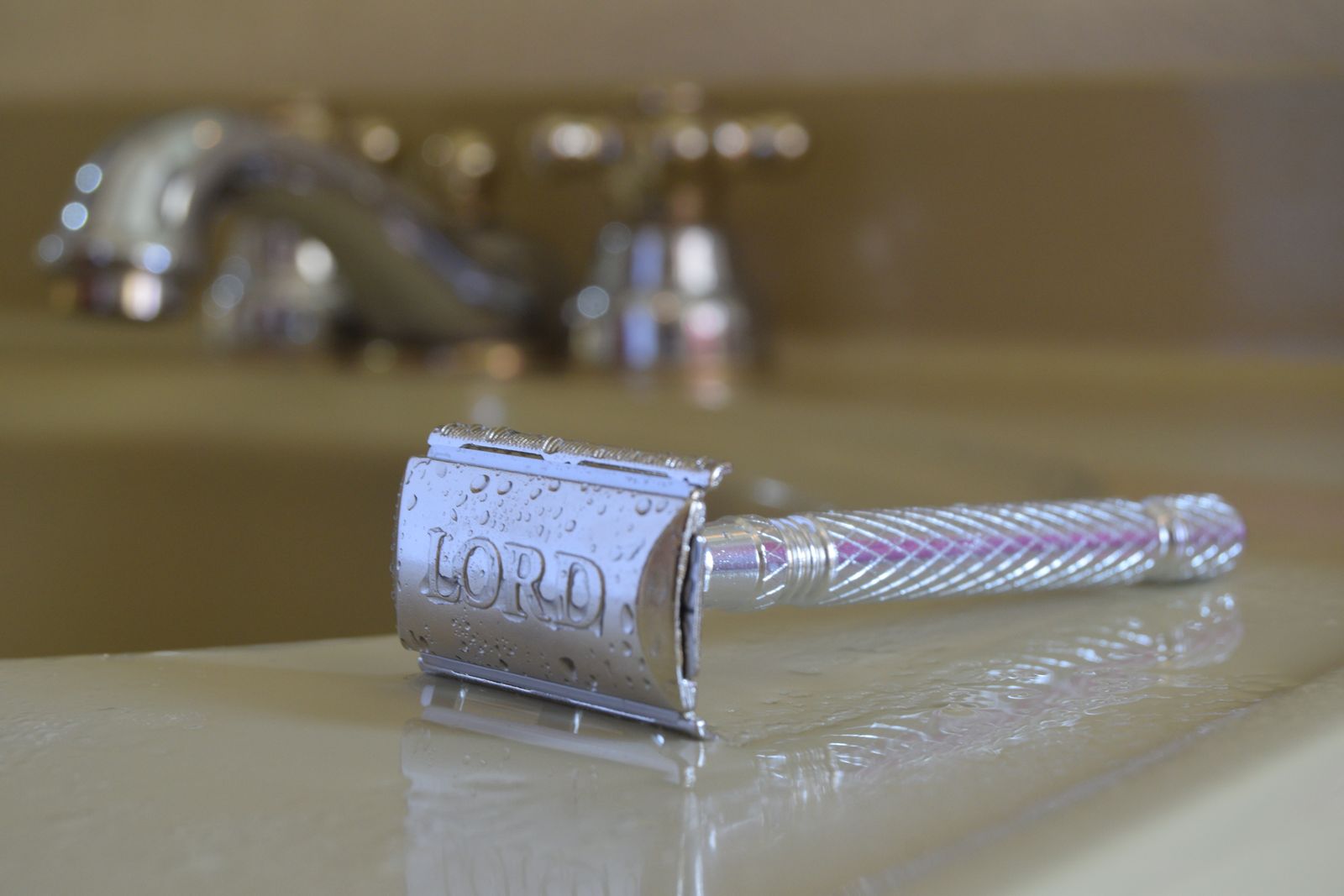
Why the Safety Razor Still Matters
The double-edge safety razor has outlasted every gimmick and marketing cycle precisely because it works. Unlike cartridge razors with their disposable plastic heads and rubber strips, a safety razor offers a single, exposed blade that cuts hair cleanly without dragging or pulling. The design is elegantly simple: a handle holds a blade at a fixed angle, requiring the user to find that angle and maintain it. For this reason, the learning curve is real—but the payoff justifies the effort.
Dermatological research consistently supports proper safety razor technique as an effective way to reduce razor bumps and irritation. The American Academy of Dermatology emphasizes that shaving with the grain, proper preparation, and attention to technique prevent the ingrown hairs and razor burn that plague cartridge and electric razors. A safety razor, when used correctly, is fundamentally less irritating to the skin.
The sharp blade on a safety razor requires no downward force; let gravity and the blade's sharpness do the work.
Loading the Blade: Setup for Success
Before the first stroke, the blade must be loaded correctly. Most safety razors have a screw-handle design: unscrew the handle or twist the knob at the base to open the razor head. Some razors open like a book; others separate completely. Consult your specific razor's documentation.
Handle the blade only by its sides—never touch the cutting edges. Most blades are packaged with a paper or plastic wrapper that slides off easily. Once exposed, grasp the blade by the flat sides between thumb and forefinger, aligning it with the head's slots. Close the head carefully, then tighten the handle until snug—firm enough to hold the blade secure, but not so tight that you strip threads. A secure blade will not shift or rattle during shaving.
Safety note: New blades are exceptionally sharp. Treat them with the same respect you would a sharp knife—minor carelessness results in cuts.
The 30-Degree Angle: Finding and Holding the Sweet Spot
Blade angle is the single most critical variable in safety razor shaving. The ideal angle is approximately 30 degrees between the blade edge and your skin. Too steep and the blade scrapes; too shallow and it doesn't cut. Finding this angle requires practice, but the investment yields immediate returns.
To locate your angle, place the razor head flat against your face, then slowly tilt the handle downward until the blade engages the stubble. Listen for a faint cutting sound—not a scrape or drag, but a soft whisper. That is your angle. Some shavers describe it as the handle pointing slightly away from the face, roughly perpendicular to the floor. Others hold it with the handle perpendicular to their cheek.
The angle varies slightly depending on your razor's head geometry and blade choice, so expect minor adjustments. The 'cutting-versus-stop-cutting' exercise helps: hold the razor at a steep angle, then slowly lower the handle until the blade begins cutting, then tilt back to the edge of engagement. That zone is your target. Repeating this tactile learning on different facial areas—cheeks, jawline, neck—trains muscle memory. Once established, the angle becomes automatic.
Pressure, Stroke Length, and Grain Mapping
The cardinal rule: let the razor's weight do the work. Beginners frequently press down with the force they used on cartridge razors, introducing nicks and irritation. The sharp blade on a safety razor requires no downward force. Hold the razor with a light grip—firm enough that it doesn't slip, loose enough that a canary could perch on your wrist without injury.
Use short strokes of one to two inches. The fixed blade head cannot flex around cheekbones and jaw angles, so shorter strokes allow better control and prevent binding. After every three to five strokes, rinse the razor under warm water to remove lather and stubble buildup. A clogged razor performs poorly and may pull rather than cut.
Beard grain varies across the face. Hair on the cheeks typically grows downward; neck hair may grow upward or in spirals; chin hair often grows sideways or diagonally. Spend a minute beforehand running your finger across each zone to identify grain direction—you'll feel slight resistance when moving against the grain. Your first shaving pass goes with the grain, following hair growth direction. This minimizes irritation and ingrown hairs. If needed, a second pass can go across the grain. Reserve against-the-grain passes only for areas where technique is reliable, and only after your angle and pressure become consistent.
Blade angle is the single most critical variable—spend time finding your 30-degree sweet spot through tactile feedback and patient adjustment.
Blade Selection and Maintenance
Not all safety razor blades perform identically. Differences in steel composition, hardness, coating type, and manufacturing precision create significant variation. Feather blades, made in Seki, Japan, rank among the sharpest available and suit experienced shavers with coarse hair. Astra Superior Platinum blades earn a reputation for beginner-friendliness due to their substantial comfort coating and forgiving edge. Derby and Shark blades reduce nicks and cuts during the learning phase.
Blade coatings serve practical functions: platinum maintains sharpness without imperfections; PTFE reduces friction for sensitive skin; chromium minimizes corrosion. The best blade is the one that feels right on your face in your specific razor. Experimentation is normal—no universal 'best' blade exists. Change blades every 5–7 shaves minimum, sooner if tugging or pulling occurs. A dull blade compensates by pulling harder on hair, which is why inadequate blade replacement remains a top cause of irritation.
Store razors in a dry place. Moisture accelerates corrosion and dulls edges. Many shavers use a simple stand or hang their razors to air-dry fully between uses.
Preparation and Post-Shave Care
Proper shaving begins before the blade touches skin. Wash your face with warm water, then apply a moisturizing shaving cream or soap and work it into lather with a brush. The brush simultaneously softens stubble and lifts hair away from the skin. If time is short, at minimum hold a warm, damp washcloth against your face for 30 seconds to warm and soften the hair.
After completing all passes, rinse thoroughly with warm water to remove all lather and loose stubble. Follow immediately with a cool, damp washcloth applied to shaved areas—the cooling reduces inflammation and closes pores. Pat dry gently, then apply aftershave balm or a light moisturizer. Avoid alcohol-based aftershave, which irritates freshly shaved skin; balms designed for wet shaving are gentler and more effective.
Common Mistakes and How to Avoid Them
Excessive pressure tops the list of errors. New safety razor users often unconsciously press down, resulting in nicks, razor burn, and irritation. Check yourself mid-shave by intentionally reducing pressure further—if the razor still cuts cleanly, you're pressing too hard. The blade is sharp; trust it.
Using a dull blade compounds all other mistakes. A worn blade tugs and pulls instead of cutting, which prevents finding proper angle, increases pressure dependency, and multiplies irritation. Change blades without guilt; they cost pennies. Rinsing the razor frequently during a shave prevents lather and stubble from clogging the head, which dulls performance and requires compensatory pressure.
Ignoring your beard's grain direction is a beginner's mistake that resurfaces even after technique improves. Take 30 seconds before each shave to feel your grain with your fingertips. Rushing and speed-shaving lead to missed patches, uneven results, and nicks. A deliberate pace—typically five to ten minutes—yields better outcomes and reduces injury. Finally, insufficient preparation—skipping the warm-water wash or applying dry soap—makes the stubble impossible to cut efficiently, which demands excessive pressure and causes irritation.