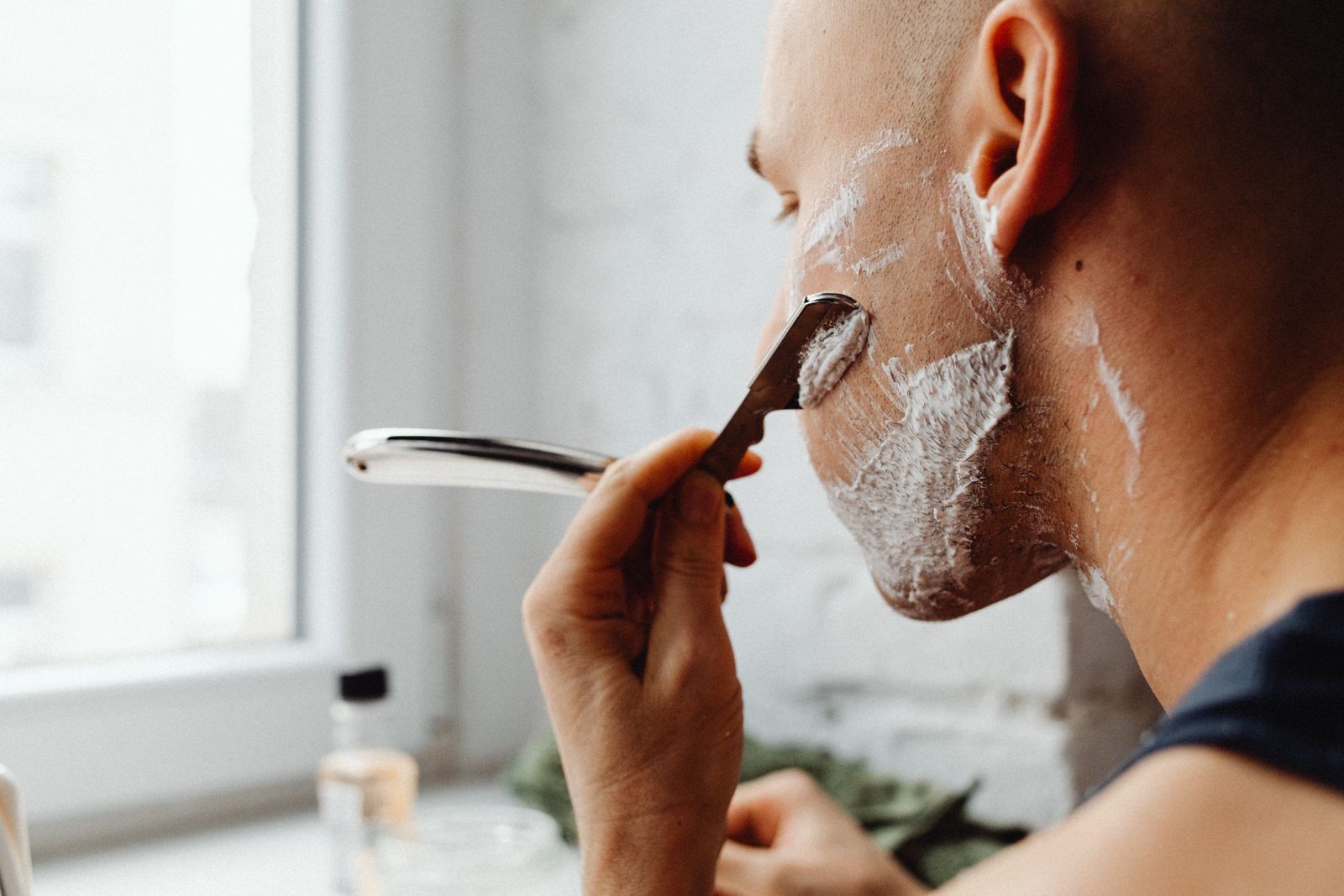
Why Wet Shaving Works Better
The wet shave is the traditional method favored by barbers and dermatologists alike because it addresses the fundamental challenge of shaving: cutting hair close to the skin without damaging surrounding tissue. The approach hinges on understanding that beard hair and skin respond to moisture and heat.
When hair is softened—by warm water or steam—it becomes more pliable and easier to cut cleanly with less pressure. This reduces irritation. The American Academy of Dermatology recommends shaving at the end of a warm shower when hair and skin are fully hydrated, creating ideal conditions for a close shave with minimal trauma. Warm water also opens pores, allowing the razor to cut hair at or just below the skin surface without requiring excessive force.
Multi-blade razors attempt to achieve closeness through multiple passes of progressively angled blades, but this design increases irritation risk and ingrown hairs. The wet shave, by contrast, uses a single blade with proper technique to achieve equal or superior results. A sharp blade combined with correct angle, grain awareness, and light pressure outperforms brute force.
The wet shave uses a single blade with proper technique to achieve equal or superior results compared to multi-blade razors.
Preparation: The Foundation of a Good Shave
Preparation determines 40% of shaving success. Begin by cleansing the area to be shaved with warm water and a non-comedogenic cleanser. This removes oils, dead skin, and debris that would otherwise interfere with the blade's contact with hair.
Apply a warm, damp towel or washcloth to the area for 30–60 seconds. This softens the beard by raising moisture content in the hair shaft and opens facial pores. If possible, shave immediately after showering while skin is still warm.
Before applying shaving cream, consider a pre-shave oil. Dermatologists advise applying a shower oil or moisturizer before the shaving cream to protect underlying skin from razor trauma. This acts as a protective layer and improves glide.
Apply a rich, moisturizing shaving cream or gel. The product should provide cushioning and lubrication. Those with sensitive skin benefit from fragrance-free formulas designed to minimize irritation. Allow the cream to sit for 15–30 seconds so it can further soften the hair.
Safety note: Do not exfoliate immediately before shaving—exfoliation removes protective dead skin and increases irritation risk.
Shave Mapping: Know Your Grain
Before the first pass, map your beard grain. Hair does not grow uniformly across the face. The cheeks, chin, jaw, and neck each follow different patterns. Shaving against the grain without understanding these patterns is the primary cause of razor bumps and ingrown hairs.
To map your grain, let stubble grow for 2–3 days. Divide your face into zones: upper cheeks, lower cheeks, chin, and neck. In each zone, rub your fingers across stubble. When it feels smooth, you're going with the grain. When it feels rough or scratchy, you're going against it. Alternatively, drag a credit card across dry skin: smooth = with the grain, rough = against.
Document your findings with a quick sketch for future reference. This map becomes your shaving template.
Shave mapping reduces irritation, ingrown hairs, and razor burn by working with hair's natural growth pattern rather than fighting it. The standard approach is the three-pass method: first pass with the grain (safest), second pass across the grain (closer), and third pass against the grain only if your skin tolerates it and you want maximum closeness.
Let the razor's weight do the work—never press down. Pressure is the enemy of a good shave.
The Shaving Technique: Angle, Pressure, and Passes
Hold the razor at approximately 30 degrees to your skin. This angle allows the blade to cut hair effectively without being so steep that you risk cuts, or so flat that the blade misses hair.
Use short strokes of 1–2 inches. Long sweeping motions reduce control and increase irritation. Let the razor's weight do the work—never press down. Pressure is the enemy; too much pressure increases friction, which causes razor burn, cuts, and irritation. Applying excessive pressure is one of the main mistakes to avoid.
Rinse the blade under warm running water after every 1–2 strokes. This removes hair, cream residue, and debris that would otherwise clog the blade and reduce its cutting ability.
First Pass (With the Grain): This is the most important pass. Follow your grain map and shave in the direction hair grows in each zone. This pass removes roughly 60–70% of the beard and produces minimal irritation. After this pass, most shaves are complete enough for daily use.
Second Pass (Across the Grain): If you want a closer result, reapply shaving cream and make a second pass perpendicular to your grain map. This removes another 20–25% of remaining stubble and produces a noticeably smoother finish.
Third Pass (Against the Grain): Only attempt this if your skin is not already irritated and you have experience with the first two passes. This final pass can produce an exceptionally close shave, but it carries the highest ingrown hair and irritation risk. The American Academy of Dermatology recommends shaving in the direction hair grows to minimize irritation, so the against-the-grain pass is optional.
Post-Shave Care and Irritation Prevention
Immediately after the final shave pass, rinse thoroughly with warm water to remove all shaving cream. Then apply a cool or cold damp washcloth to the shaved area for 30 seconds. This closes pores and reduces irritation and redness.
Pat skin dry gently—do not rub. Apply an alcohol-free aftershave balm, moisturizer, or lightweight oil to hydrate the skin. Alcohol-based aftershaves can sting and dry skin unnecessarily.
Avoid exfoliating the shaved area for at least three days afterward. Your skin needs time to recover. After three days, gentle exfoliation can help prevent future ingrown hairs by keeping the area clear of dead skin.
Maintain your razor: Change your blade or discard disposable razors after 5–7 shaves. Dull blades require more pressure and additional passes, which increases irritation. Store razors in a dry area and ensure they dry completely between uses to prevent bacterial growth. Never leave a razor in the shower or on a wet sink.
For those prone to ingrown hairs, shaving frequently—daily or every 2–3 days—prevents hair from growing long enough to curl back into the skin. If an ingrown hair develops, use warm compresses and gentle exfoliation to encourage it to surface. Do not pick, pluck, or squeeze, as this can cause infection or scarring.
Related Skills and Further Practice
The wet shave is a skill that improves with practice. Mastering how to use a safety razor provides a durable, cost-effective tool for wet shaving. Knowing how to sharpen a knife teaches the same principles of angle and pressure that make shaving efficient. Other related grooming fundamentals like how to tie a bow-tie and how to iron a shirt round out a practical grooming repertoire.
The investment in learning proper wet shave technique pays dividends: fewer ingrown hairs, less razor burn, and a closer shave than most men achieve with multi-blade razors. The only cost is attention to detail and repetition.